
By Elisabeth Rasch
Home of Gottfried Berlin
Gottfried in Berlin was the standout choice for this interview, not only because his work represents a fairly broad canvas, but also because it reflects change over time.
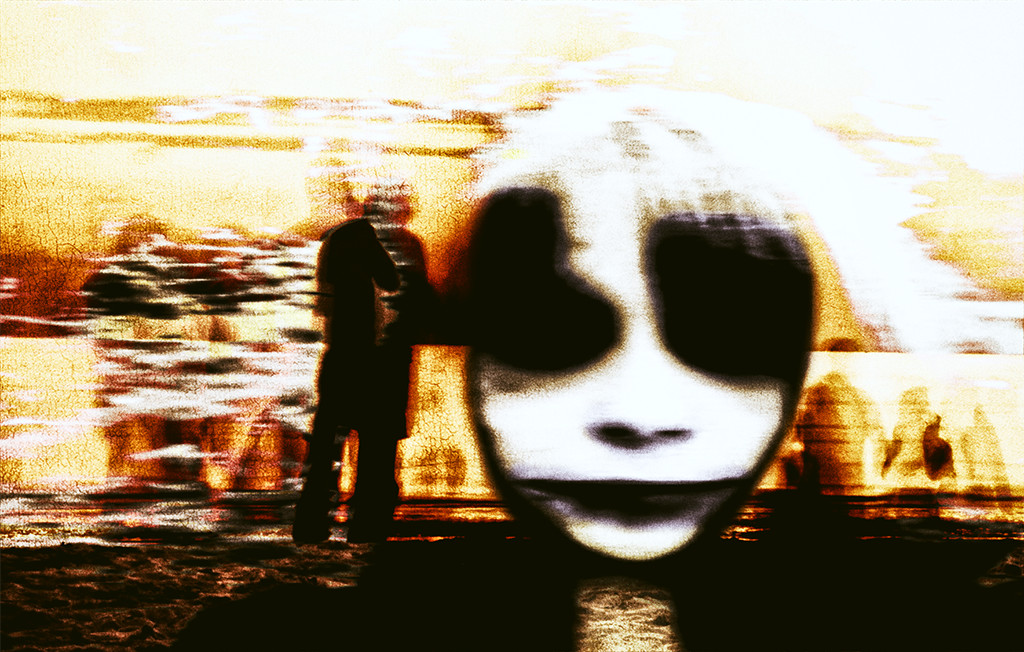
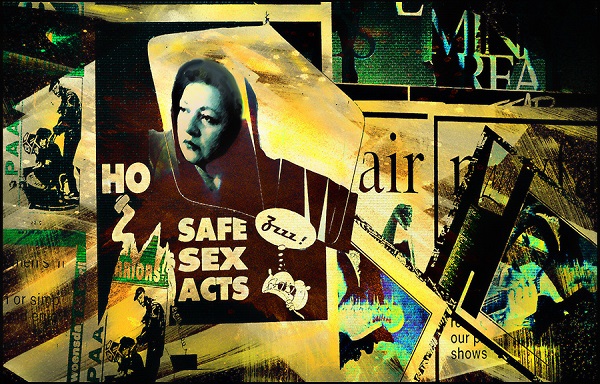
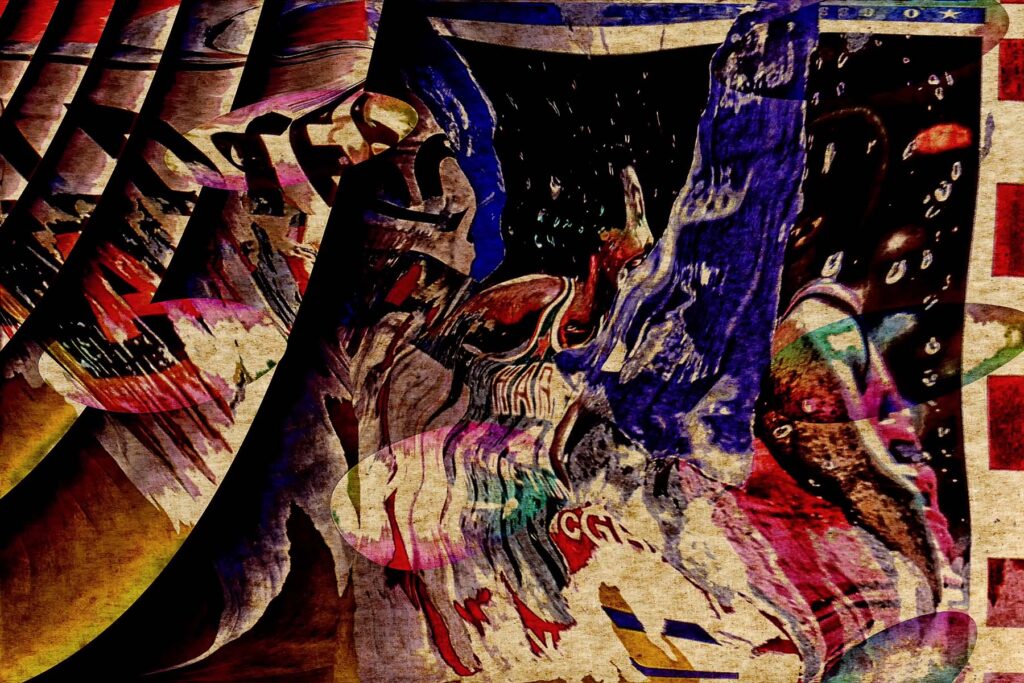
He describes himself in a short bio as being “… an artist/art-photographer, whose works have been conceived over a period of thirty years on three continents. They are produced in oil, acrylic, crayon, pen, as well as quite a lot in a mix of those media, and, during various earlier periods, predominantly on negative and transparency film.”
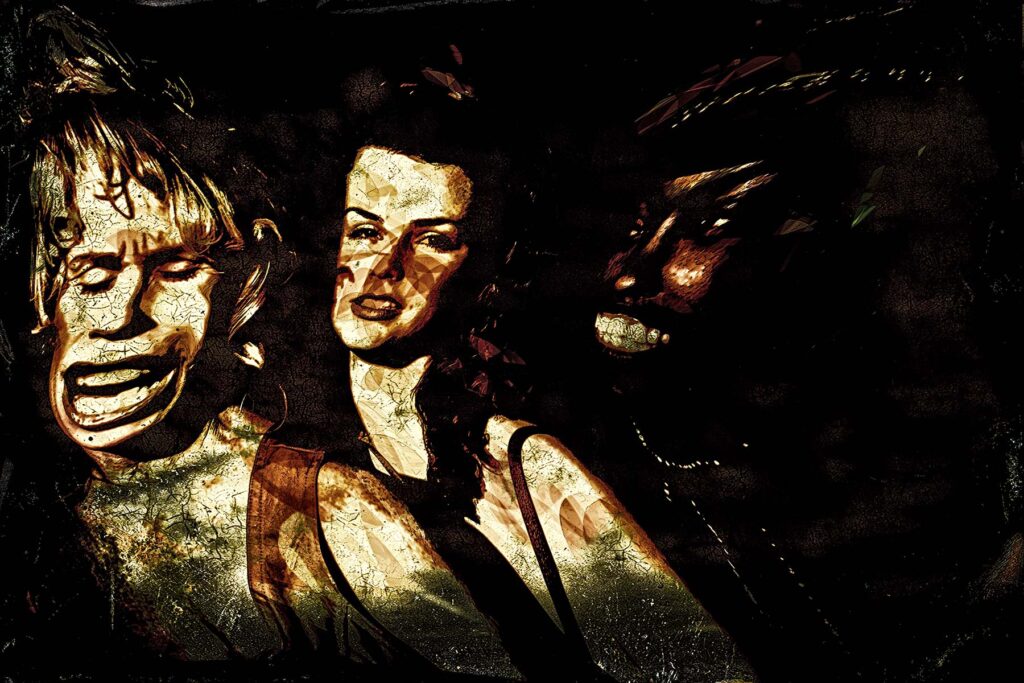
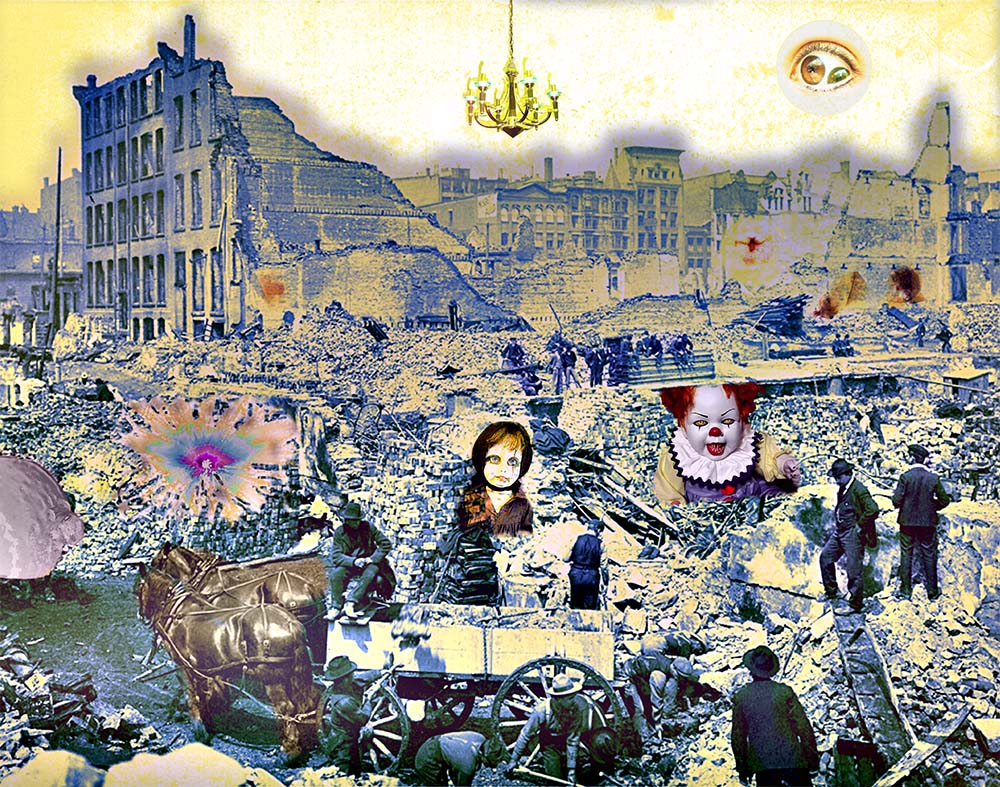
Although his bio goes on to say, “The nature and styles of my works are very broad, because I believe an artist can often express life experience and perception of the world in different genres of art…,” his more recent work shows a narrowing of preference for expressionism—both surrealism and abstract.
For this interview, I visited Gottfried in his comfortable and very tidy apartment in an area of Berlin that was once part of East Berlin, before the wall came down. He dislikes being disturbed in his studio.
He tells me that he feels very comfortable in this particular area of the city, which has over 5,000 resident visual artists and more than 400 art galleries. He reminds me that just a few of the current “names” from Berlin include Joseph Beuys, Anselm Kiefer, Nam June Paik, Bruce Nauman, and Gerhard Richter.
The walls of Gottfried’s apartment are adorned, judiciously, with the works of other prominent artists. Very little of his own work is on display; he regards that as presumptuous in the face of friends and visitors.
Nonetheless, even from the works he has hung—and their placement—one senses structure, particularly in his earlier work. At the same time, his present predilection for freedom from structure is equally apparent.
Interview
E.R. What would you say are your reasons for producing works in different genres?
G. On a higher plane of thinking, there are art styles which correspond to different philosophical concepts.
E.R. But how does that, in practice, affect the choice of area in which you work?
G. In a way, it is complicated, but I value some art styles more than others. It often comes down to the mood I’m in when I begin a work.
On the other hand, I may already have an idea of the subject matter—perhaps a story or an emotion—and that leads me to choose the genre as the vehicle for expressing the concept.
I value realism in some cases because of its ability to create strong impact at a superficial level. I value impressionism in others because it can add meaning at a more subconscious level. That added meaning often comes with abstraction. I suppose that is why the term abstract expressionism was coined.
E.R. But most of your recent works sit within expressionism, don’t they?
G. That is fairly true, because pure expressionism raises perceived feelings about the subject. It is more about our reaction than the subject itself. Even though it abstracts detail, it is, in a sense, a value-added representation.
E.R. And you also work in pure abstraction?
G. Yes. Those would be classified as modern abstract art, which is not really tied to any identifiable subject. It is a representation of nothing in particular—yet still carries emotional meaning.
Most of my abstract work is lyrical abstraction, where feeling is expressed through imagery that is often formless, but intended to evoke meaning—though ultimately, the viewer creates that meaning.
E.R. Are you saying the viewer determines the meaning entirely?
G. Often, yes. There can be multiple meanings—almost like parallel universes. In truth, the meaning is what the viewer chooses to give it. That’s part of the attraction.
E.R. Do all viewers understand that?
G. No. Some dismiss it—“My three-year-old could do that.” But creating abstract expression is often more difficult than rendering reality. It’s not about drawing—it’s about translating perception into something that produces an effect in the viewer’s mind.
E.R. What art form do you prefer overall?
G. It’s not about preference. For me, it’s people—their expressions, their eyes as windows to the soul—regardless of the form.
E.R. So you focus on portraiture?
G. Not at all. I have little interest in portraiture. My work aims for deeper meaning. Many works don’t even include faces.
E.R. What kind of meaning do you strive for?
G. Often something universal, or something specific to the subject. Some earlier work explored elements of fetish—though not exclusively. When people pursue desires, you see the widest range of human expression.