


The art of Chin Chih Yang is nothing if not social. His projects almost function like small corporations—if by “incorporation” one understands dynamic, voluntary associations not geared toward profit.
His work anticipates a world where groups come together without privatization, simply to participate in a shared goal. The interactive nature of his performances is inseparable from their message, which often addresses ecology, globalism, and interconnectivity.
At its core, Yang’s work attempts to salvage human connection from the alienation produced by spectacle and the technologies that sustain it.
I recently sat down with Yang to discuss the social nature of his practice—how it involves groups, and what interaction means in the context of the messages his work communicates.
Interview
Jeff Grunthaner: Your practice is highly interactive, and your projects often involve audience participation. How does this come about?
Chin Chih Yang: As an artist, I’m always looking for something that is not just interesting to me, but something that challenges my habitual way of thinking. Involving other people—and their reactions—is essential to how my performances impact them.
There’s a lot of experimentation in this. I may not fully understand the outcome of an interactive performance, but I am drawn to the possibility that something real may happen—an event in real life.
JG: Performance art sometimes approximates painting or sculpture, in that it’s still something viewers observe. Does interactive work need to reject traditional media?
CCY: If I use traditional forms—like painting or sculpture—it doesn’t really work for me. Some artists create something visual and then attach text to explain its meaning. I don’t connect with that.
If a work truly involves the audience, the message communicates itself. When I started, I worked more traditionally, but over time I shifted toward practices where I don’t fully know what will happen. What I can visualize is how people will engage.
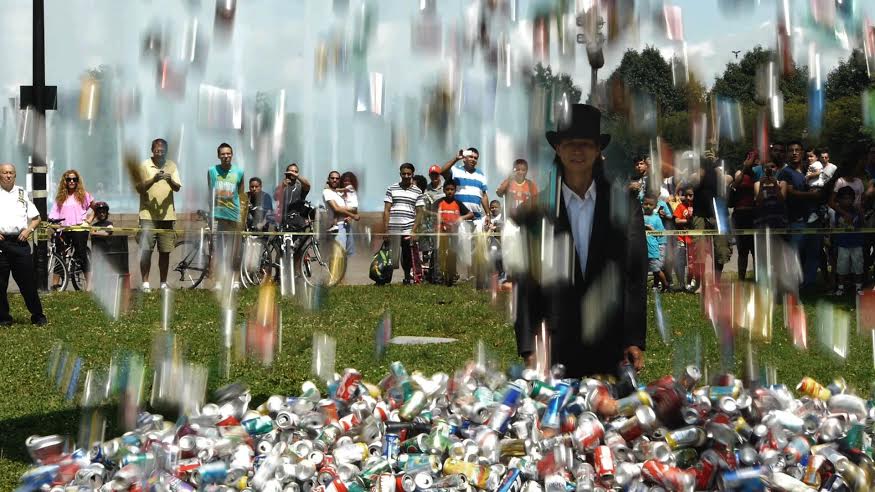
JG: In your performance Kill Me or Change (2012) at the Queens Museum, you created something like a temporary, collaborative structure. Can you describe that process?
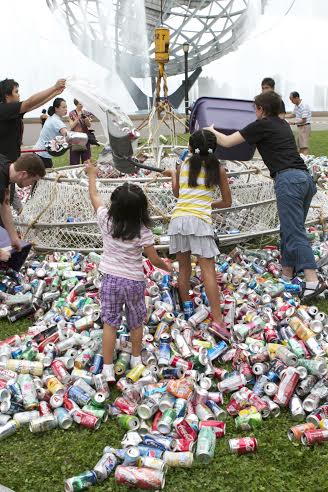
CCY: It took me four years to fully realize Kill Me or Change, which addresses consumerism and global pollution in a dramatic way.
Every part of the project involved collaboration. While working as an art teacher in New Jersey, I invited students and their parents to collect cans. The process became a way for participants to understand that their relationship to objects is also a relationship to global networks and connections.
JG: Prayer for Haiti (2010) was also highly social. Can you talk about that experience?
CCY: Normally, Union Square is full of people. But that night, it was minus 7 degrees—very cold—so turnout was lower. Still, many people participated.
When we walked to the Haitian Consulate, others joined us along the way. That level of participation is how I measure success.
JG: I remember someone asking what the project was about and responding critically. How do you see the relationship between your performances and real-world action?
CCY: Talking to people face-to-face is much more powerful than consuming media. Everyone watches the news, but that doesn’t always lead to action.
When someone connects with you directly, it creates a more honest response. Affecting people emotionally is what matters most.
JG: In your work, people interact not just with you, but with each other. How does that connect to your message?
CCY: I want to critique society, but not in a way that feels like a lecture. I don’t want to say “Donate” or “Reject consumerism” like a politician.
Instead, I create events that spark curiosity. People stop, watch, and sometimes join in. That moment of engagement is powerful—it stays with them longer than something they see on TV.
JG: What are you working on now?
CCY: My main project is Watch Me, We Can Do It!, which I hope to realize in Central Park.
It will involve many different people—technology specialists, helicopter pilots, even a personal trainer. I may collaborate with a rescue association and possibly larger organizations.
Even as a relatively small artist, I believe I can create large-scale collaboration. That sense of organization is central to my work.
Even if the project fails or is misunderstood, that’s okay. It’s something I can offer to people—a kind of signal or possibility.
Gallery
Image 1
Kill Me or Change
Interactive Performance & Installation
Queens Museum of Art, 2012
Image 2
Kill Me or Change
Interactive Performance & Installation
Queens Museum of Art, 2012
Image 3
Human Sculpture II
Interactive Performance
Queens Museum International 4, 2009
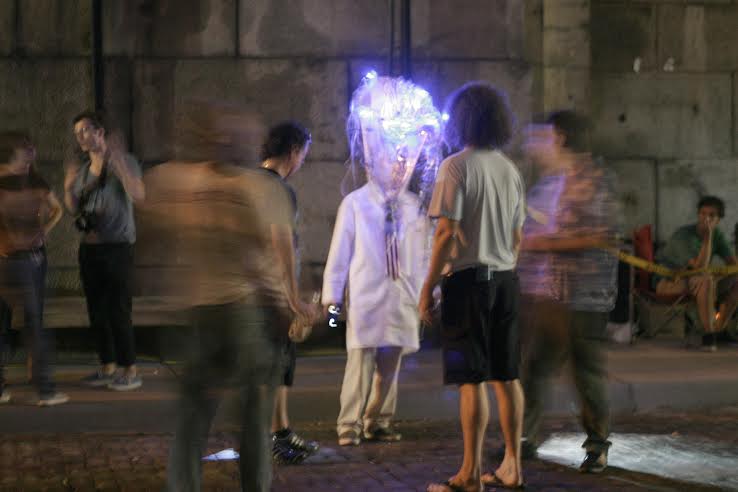
Image 4
Broken Mind
Roving Video Projection / Interactive Performance
Dumbo Art Festival, 2010
Photo by Matt Taylor



Thank you for this post.
Chin Chih goes a long way, nice story.
I’m amazed, I have to admit. Rarely do I encounter a blog that’s equally educative and interesting, and without a doubt, you’ve hit the nail on the head. The issue is something that not enough folks are speaking intelligently about.
This is a fascinating article by the way. I am going to go ahead and save this post for my sister to check out later on tomorrow. Keep up the first-rate work.