Home Blog Page 7

Badass


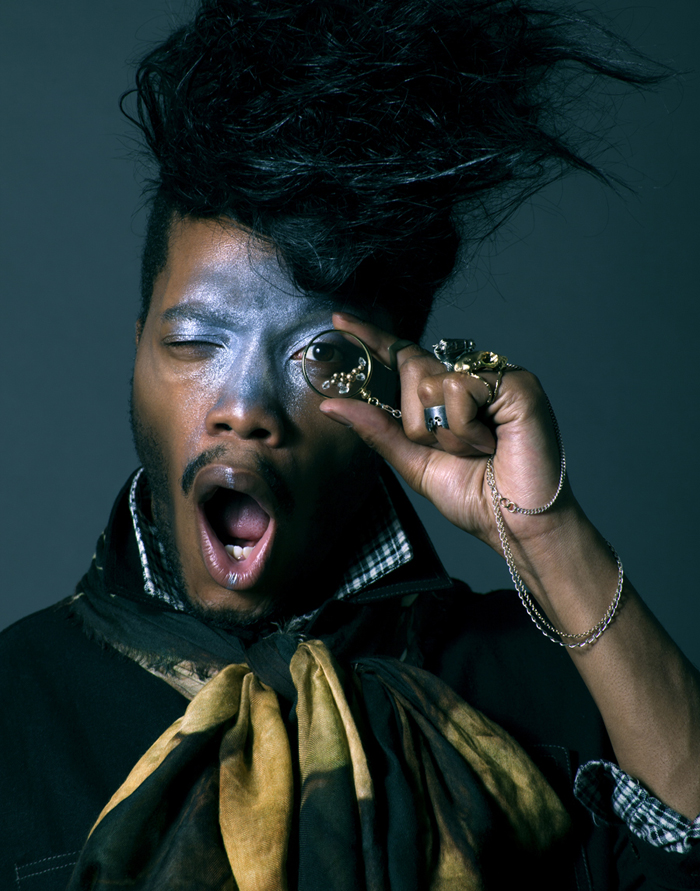
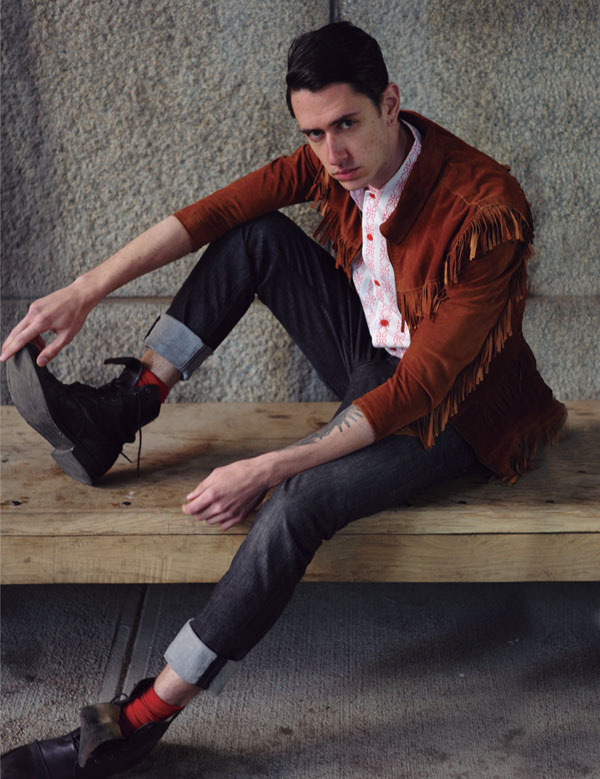
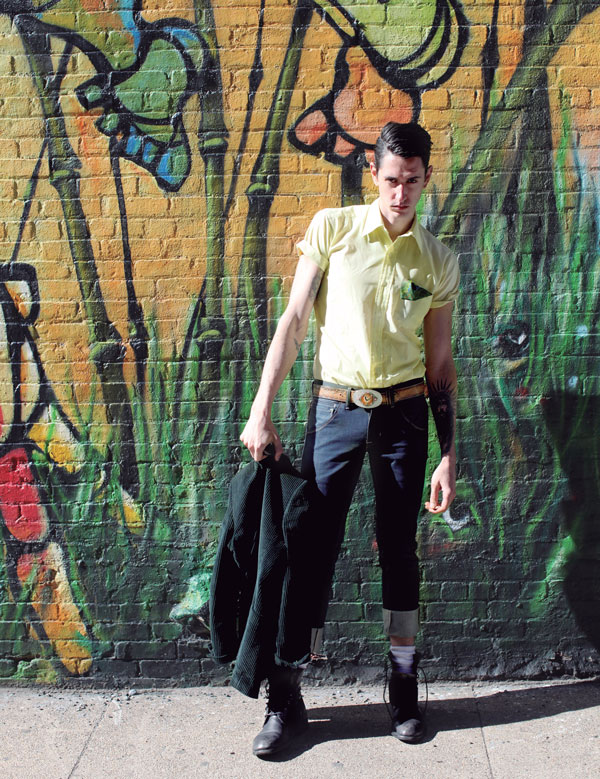
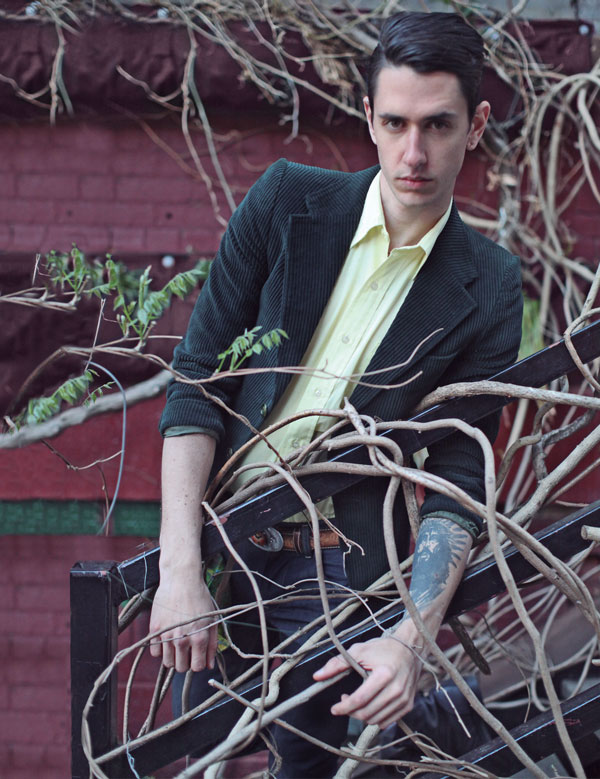
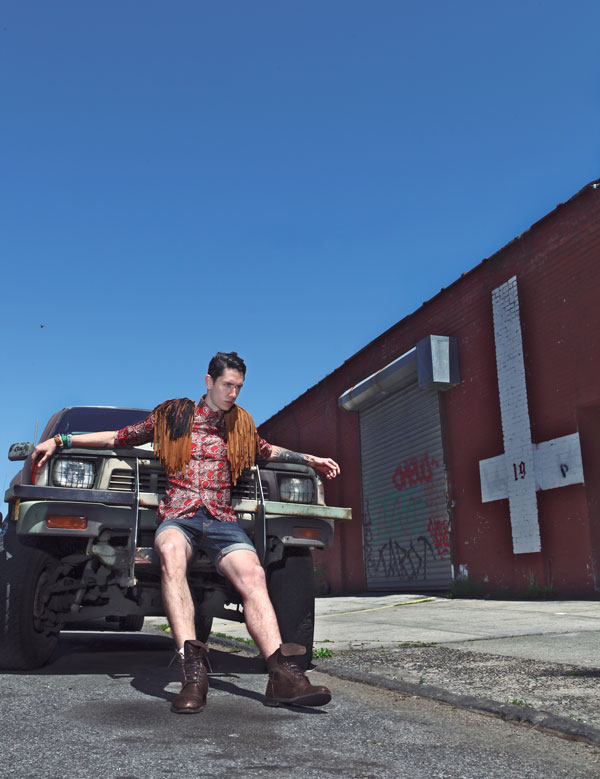
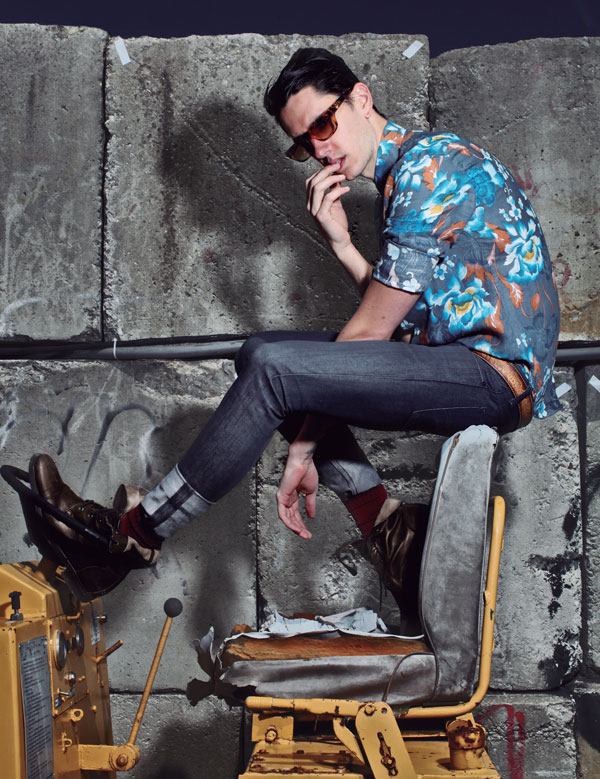
Badass Fashion Editorial, Issue 1 Debut

Photographer: Brian Pangillinan

Stylist: Cleo

BabySkinGlove

BabySkinGlove is a group unique in the performance art circuit for its devotion to glamour, spectacle, and larger-than-life personas.

Whether appearing as inspirational ballet students one night or abused country superstars the next, their trail of trashed camp and digital detritus pushes the NYC counterculture continuum into farther territory.

Their performances recall Jack Smith’s hermetic drag culture and the iconoclastic identity play of No Wave cinema—though precedents become difficult to define when a group mutates so fluidly.


As a collective, their polymorphous perversity knows no bounds. Historical eras are inverted, and outdated constructs like gender are left behind entirely.

Audiences are drawn into the group dynamic almost involuntarily, while the cult-like charisma of their leader, Bailey Catherine Dorothea Nolan, suggests total control.

Through every transformation, her vision remains the constant.


Interview

What is the goal of BabySkinGlove?

“Someday time travel will be as passé as home phones, but in the meantime, there’s BabySkinGlove.

Ultimately, transportation is my goal—a full-body motion from one real space to another psychic space. I want to remove every viewer from that cold, hard gallery chair and drop them directly into another reality.

BabySkinGlove is like the Internet—both in its after-effect and its complicated definition.

I want to erase all things definitive—time, gender, structure—and create space where people can think about what they don’t want to think about… or not think at all.

Eventually, BabySkinGlove will exist everywhere—culturally, commercially, mythically.

But in the meantime, I want a private jet and a house big enough to give each cat a bedroom.”


What do you consider your most ambitious actions?

“Being a woman is still radical.

I live in a constant state of truth and don’t bend my ideals for anyone.

BabySkinGlove is total exposure—everything laid bare.

I’m interested in what exists on the edges: the destitute, the lonely, the yearning, the drag.

I want to speak a language that isn’t easily recognized—but is immediately understood.”


What role does glamour play in performance art?

“All performance is expressed through the body.

How you decorate your body is the equivalent of what a painter does on canvas.

Glamour is a state of mind.

I’ve never been rich, but I exist in a constant state of richness.

Presenting yourself as someone with money is the same as being someone with money.

My body is part of the work—and I invite you to interpret it.”


How does your work relate to your peers?

“A few years ago, BabySkinGlove hired a limo and abducted artists like Ryan Trecartin and Lizzie Fitch.

At one point, something clicked—I realized I was cosmically connected to the artists I admire.

Like them, I feel a responsibility to pursue artistic perfection.

I admire many artists—Raul de Nieves, Ann Liv Young, Colin Self—and of course, my own collective.

They are the foundation of everything I create.”


What inspires BabySkinGlove?

“Google Images is my homepage—my inspiration is infinite.

Right now: Miss Piggy, the forestry industry, extreme layering, female country stars, red food, Anne Geddes, corporate marketing.

Everything begins as an image—then evolves into something multidimensional.

Recently, I’ve been deeply connected to my whale spirit animal.

I’m drawn to things too large to hold—especially bodies of water.”


At your performances, you take on a guide-like role. Why?

“I had my aura read—I have dominant energy.

We’re all just energy exchanging particles.

Performance is about crowd control, but also about activating people.

During performances, I separate from my everyday self and access something higher.

In that sense, I become a guide.”


Is your work a parody of self-help culture?

“Nothing I do is parody.

I’m not mocking—I’m responding.

Art helps people just like therapy or reading.

My work is a tool for transformation.

In a way, I’m studying the art of self-help.”


What is your concept of utopia?

“Imagine Person A tells Person B that a white floor is blue.

Normally, Person B disagrees.

But if Person A builds a relationship—shares experiences, creates trust—then Person B begins to see differently.

In utopia, BabySkinGlove is always Person A.”


Do you want a mass audience?

“I dream of larger reach, of course.

But I’m focused on personal interaction.

My most powerful performances happen in intimate spaces.

Still, I wouldn’t mind being a reality TV star.

In the end, I want to leave a lasting impression on everyone I encounter.”


What’s next for BabySkinGlove?

“I’ve been researching a group of women who have lived in isolation since 1853, mourning the death of Cardinal birds.

I’m developing a museum exhibition around their culture.

I’m also working on zodiac-based fashion using custom red wool dyes.

And I’m collaborating on a new immersive project in Bushwick.

And, as always—I’m working on my cult.”

The Organization of Desire: Writing & Art by Pierre Emmanuel Fillet

Pierre Emmanuel Fillet is something of a rarity in contemporary art. Both artist and writer—as well as an actor and filmmaker—Fillet’s sensibility cannot be confined to an easy rubric or reduced to a single genre.

His intelligence operates as an intricate web of transferences, moving from one region of experience to another and culminating in a kind of mathematical formalism that verges on the mythic.

As he writes in L’art numérique: hybridation, an unpublished manuscript:

“We could understand digital matrices as a kind of animism—an animism whose gods would be conceived as systems and structures, each god warring against the others while forming itself out of objects and functions.”


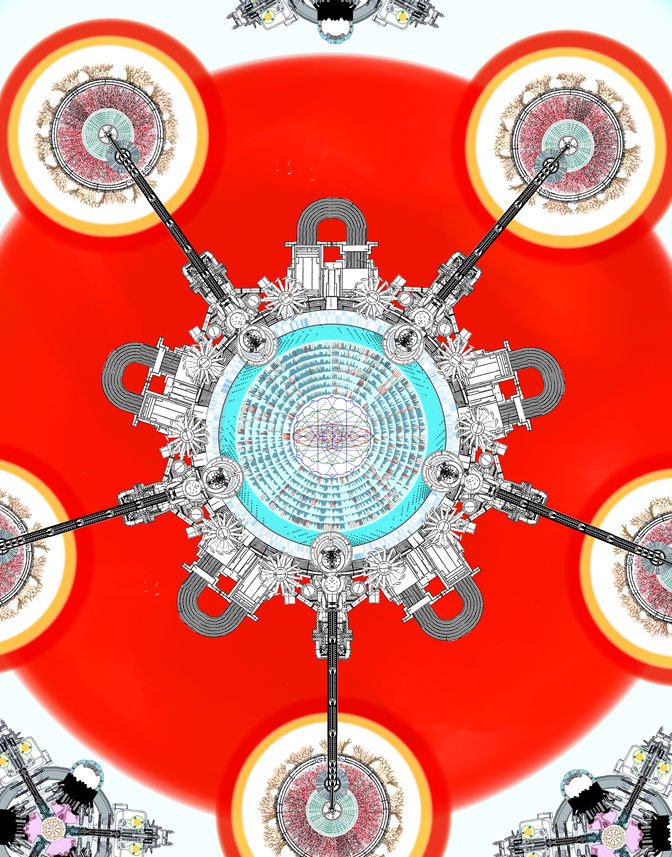
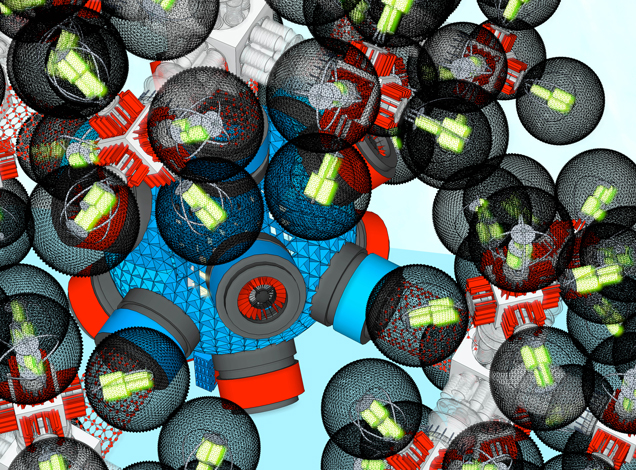
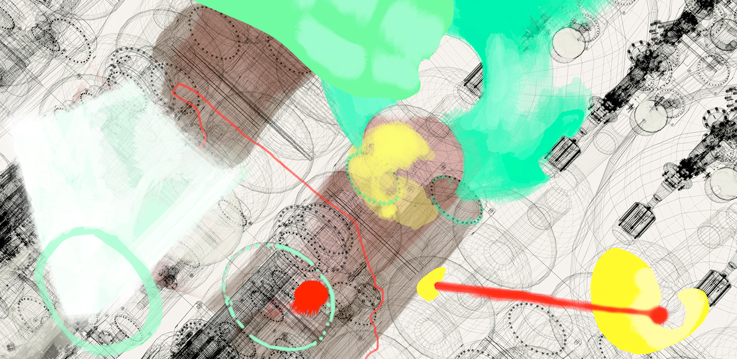
In paintings such as Neural Receptor Head and Örin, Fillet reveals a covert vitality within the minutiae of Picabian, machine-like structures.

An upsurging psychical energy binds their intricate tessellations—a sense of momentum that gestures toward a fully realized utopia, one that, at this stage of human evolution, remains visible only in diagrammatic form.

By detailing the virtual schematics of a world where intelligence and form are tightly fused, Fillet redefines our understanding of “system.” His works articulate a vast interrelatedness of parts while maintaining a spatially eloquent sense of freedom.


The works included here function as organic, gestural responses to the ubiquity of digital mediation.

They portray an a priori reality saturated with functional configurations—structures that echo and distort the visible world.

A closer examination reveals a complex weaving of collage elements with gestural brushwork, assembled with a mathematical elegance that subtly interrogates digital media itself.

Visual space becomes an arena of vectors in motion.


Fillet engages both his palette and spatial extension on their own terms, confronting his medium as a set of problems to be worked through in practice.

Each painting becomes a site of inquiry.

The resulting atmosphere carries a sense of nervous energy—though not anxiety.

Rather, it reflects a deeper realization:

That the matter we shape through our technologies is nothing less than the concretized extension of our own bodies.

http://www.pierreemmanuelfillet.com/


Melissa Robin: Photographer of the Year

sandsoftime_melissarobin

It’s a mild, late-fall afternoon. Melissa Robin stands behind her Canon 5D Mark II—a familiar place for her.

Her sapphire-blue eyes shimmer as she peers through her favorite 85mm lens, taking in a perfectly composed scene. She smiles knowingly. This is where she belongs.


“The reality is, photography chose me. Nothing else ever gave me the same release or inspiration.

From the first moment I held a camera, I knew photography would become a powerful force in my life. It’s how I let go of negative energy. It’s how I heal. It’s how I celebrate what matters most.

There is nothing more satisfying than capturing a beautiful moment—or creating a dream—and sharing it.”


In absorbing Melissa’s body of work, it becomes clear that inspiration is never in short supply.

“I’m inspired by a range of things: color, music, light, my dreams, and most of all, human emotion. These elements overlap, shift, and combine endlessly.

But ultimately, it’s about connection. The moment someone opens up—when they let me past the walls guarding their heart—that’s when the magic begins.

Telling their story. Seeing emotion surface and breathe. That’s what I’m drawn to.”


“I love scouting locations. When I lived in New Hampshire, it was easy—abandoned warehouses, forest clearings, winding rivers.

Now in New York City, my eye has shifted. Alleys, buildings, windows, staircases, parks—anywhere with texture and character.

I geo-tag everything. When a concept forms, I go back through my catalogue and match the perfect location.”


Process & Moments

When asked about her most memorable experiences behind the camera, Melissa reflects on both the emotional and the in-between moments.

“It’s hard to pick just one.

Watching a subject open up is always powerful. But I also love the behind-the-scenes moments—the transformation.

Hair and makeup. Costumes. Character coming to life. The energy on set. Even the ridiculous things I ask people to do to get the perfect shot.

It’s hard work, but when it all comes together—it’s worth it.”


Melissa was recently awarded Photographer of the Year, NYC 2012 by RAW Natural Born Artists.

Her reaction is grounded in humility:

“Honestly, I’m very humbled.

Looking back, I can see my growth and how my style has evolved. This award validates my path. It reminds me that how I see the world resonates with others.

There were so many talented photographers competing—I was shocked just to be a finalist. Winning is something I’ll never take for granted.”


Philosophy

“The art of photography spans such a wide range of subjects.

I hope my work brings new perspectives—more empathy—to areas often overlooked.

There is beauty in what we often label as ‘ugly.’ There is healing in exploring darkness.

If someone connects to my work—whether it’s the emotion, the concept, or even a single detail—then I’ve done something meaningful.

I want people to create. To explore. To find their own outlet.

You are the only limitation in your life.”


What’s Next

Melissa is currently immersed in an ambitious project:

“I’m in the middle of a 366-day self-portrait series—one self-portrait every day since January 1st.

I didn’t expect how difficult—or how personal—it would be. It’s been invasive, exhausting, but also incredibly rewarding.

Looking back, I can see strengths and weaknesses I never noticed before. It’s pushed me to stay creative every single day.”


She plans to continue building both her commercial and fine art work:

“I’ll keep growing my portrait and wedding business—it keeps me connected and inspired.

I’m also continuing my fine art series, with the goal of publishing them as books.

And I want to travel—experience new environments and cultures, and bring those into my work.”


Gratitude

“I want to thank my family and friends. I wouldn’t be here without them.

Their support has shaped who I am.

And the creative community I’ve been part of—models, photographers, makeup artists—so many incredible people.

All of you have influenced me in some way.

You are all beautiful. Thank you.”

Learn more about Melissa, and see her work:

www.melissarobinphoto.com

Logan Hicks finds his place in the world one giant mural at a time

Logan Hicks, a spray can veteran from Baltimore based in New York for the past seven years, has an upcoming show at L.A.C.E in Los Angeles entitled Thin Veils and Heavy Anchors.
An artistic and meticulous kid, Logan worked in a screen-printing shop in high school and then went to art school in Baltimore, specializing in graphic design. But he quickly became stifled and distressed with Academia Art.
He says, the 90s, it was all very elitist and gallery based, so he put his skills to more practical use by opening his own screen-printing business. I actually made a lot of money selling t-shirts and totes till I made enough money to move to L.A and start painting full time. In a city where so many dreams and aspirations get crushed, Logan was a lucky thriver: funny, I guess I never had your regular 9-5 menial job, I went from working for myself to making a living with art.

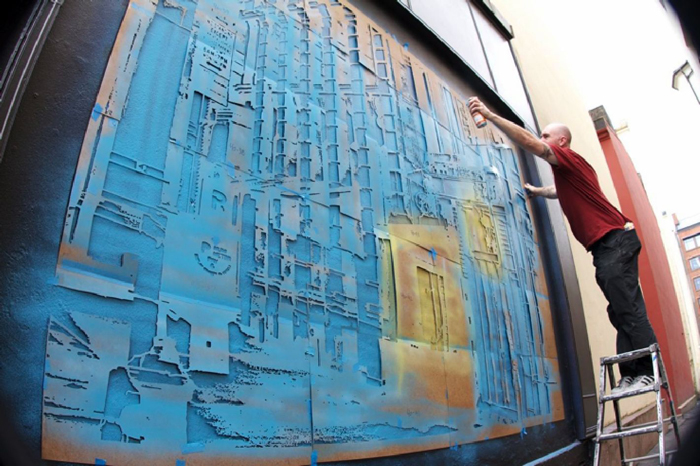
Logan made his first stencil in 1999, and focused on mastering that medium. Any jackass with a razor and some cardboard can make a stencil, but you have to transcend the medium in order to make the image powerful. I will always want to transcend whatever medium I’m working with, and that’s why I’ve stuck to stencils till now. And it takes patience and time, a whole lot of time. He referred specifically to a stencil of his that is 13 by 15 feet and has 7 layers: In order to complete that I worked every day for twelve hours for three and a half weeks. He stays away from free-form graffiti but admires artists who can work with that spontaneous fluidity. It’s mind-blowing for me to see someone just start their project on the spot like that, with no sort of map. I’ve always been a methodical, linear thinker so stencils allow you to think.

After stenciling, traveling became his second passion, which is now an essential component of his art. I take cameras on all my trips and just take pictures of everything and use them and the memories they conjure to produce my art. Most of his pieces are reflections on the places he has been to. When I was living out West, I was making a lot of East coast art, using the gritty aesthetic urban complexes of Baltimore and New York. Being removed from those cities made them gleam in my mind as vivid pictures. I guess when you get enough distance you can see the full picture better. Many talented artists have shared this sentiment; even Hemingway said he could only write about Michigan when he was in Paris. Logan’s upcoming show in L.A. will feature works based in Paris and London. Traveling, and consequently my art, is about finding your place in the world whether it be metaphorical or geographical. Though his pieces are extremely detailed and structured, he describes them as a dream being remembered the next day [with an] effect fuzzy and surreal. The intricate cogs of everyday city life fascinate him, from subways to buildings, crowded streets and overpasses. In his art replete with bold reds, blues and black, whole cities are erected like giant haunting machines. Every place he goes is new, cracking open another dreamy machine. When I asked him if he saw himself moving back West after this show, he expressed what many New Yorkers feel: I think about it all the time, but traveling must suffice for now, because once you’ve lived in New York you simply cannot fully move out of it ”you know what I’m talking about. I asked about his thoughts on street art migration into galleries and indoor spaces. Of course the beauty of outside murals is that they are democratic and uniting but there’s always going to be a sacrifice of quality when you’re working outdoors. Taking it to galleries allows me to put the utmost quality and time into my pieces so I get a lot out of that too. Democracy and coming together is very important to Logan. He has curated several shows in the past. Collaboration and cooperation are essential in any art form but graffiti and street art are changing every day, and vastly different depending on where it’s done. Indeed, street art depends on generating movement and keeping it fresh; street artists work within communities, and in turn their audience is usually very community oriented. Logan’s work breeds into and off community in a unique way. You can check out Logan’s work at: http://workhorsevisuals.com/new/


Devin Kyle Cuthbertson: Pharaoh Artist of Bushwick, Brooklyn

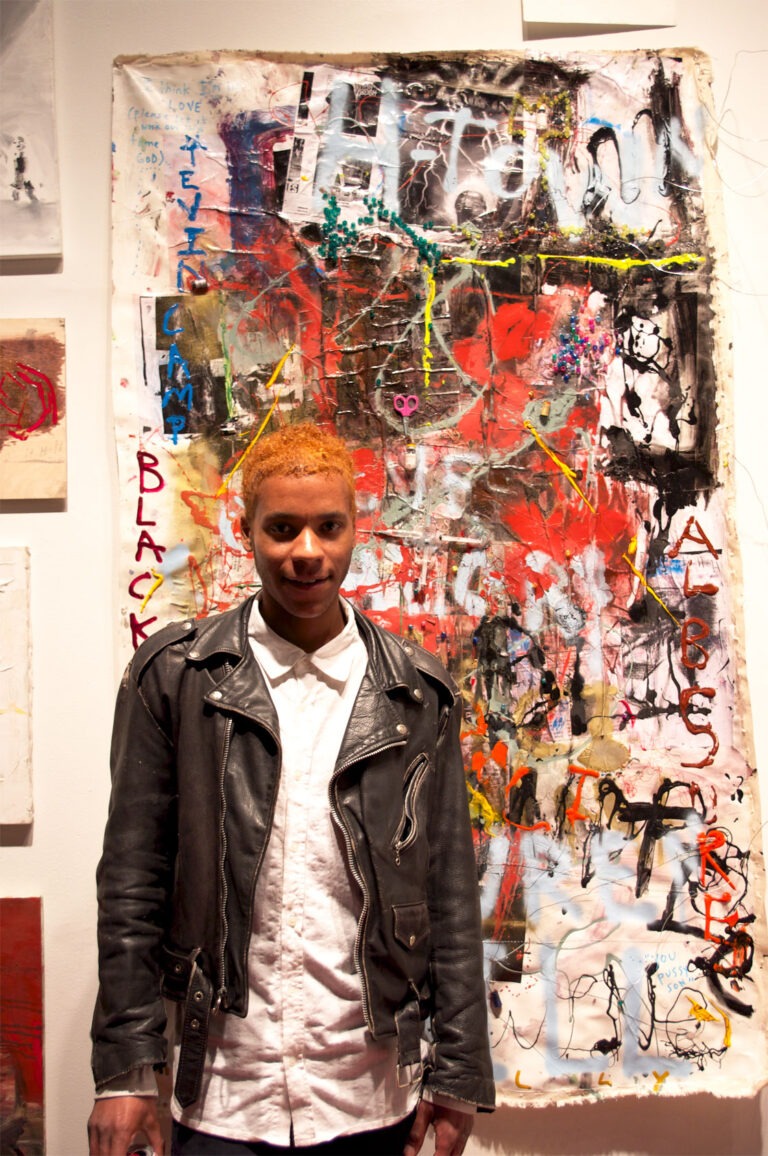
It’s Friday night. Bushwick New York. You’re in what my girlfriend (and Hugh Grant) would call the dodgy end of the New York art community. You get off the L train and swing a right on Johnson Ave in search of Youth Group Gallery. In search of Devin Kyle Cuthbertson and the opening of his latest solo art show “Now That all The Riff Raff is Gone.”

Fuck that. Too surreal sounding… start again: Don’t you hate that annoying text on a Saturday morning? You wake up, punch in the code to unlock your phone. Fuck it up because you’re too tired. Punch it in again and finally read a single short message, marking you immediately as this weekend’s unofficial damn fool. It reads:Yo! Why’d you go home? The after-party was AMAZING!” Congratulations. You just played yourself. You thought you saw Devin Kyle Cuthbertson’s solo art show but you missed an awesome music set by The Good Kids. Not to mention a live performance by Devin in the form of his musical alter-ego Psychoegyptianaryan Boy.

Verbose, a little too condescending. One more try. Here, at the end of an age that may be defined by war, recession, and a western identity still reckoning with its grandest hopes deferred, Brooklyn native Devin Kyle Cuthbertson has done something truly amazing at Youth Group Gallery. He has found a way to reach into the greasy innards of the New York, perhaps the American zeitgeist and pull out the dirty truth. By way of his own individual brilliance he has denied artistic convention with the fiercely intelligent, yet unashamedly derogatory esthetic that courses through his art and, inevitably, all those who view it. Yeah, that sounds better.

Now, I’ll admit that trial and error isn’t always the best path to genius. But I think that’s what you have to do when you want to wrap you brain around the new, the unexpected, the places and moments that you simply haven’t seen before. The artwork on display at Cuthbertson’s “Now That All the Riff Raff is Gone” show was no exception. His work was severe at some moments, whimsical at others. The freestyle cypher was pretty laid back but when Devin himself held the mic, the crowd watched him gyrate with a weird intensity. Streaks of brown and yellow paint in a particular piece remind the viewer of dirt and mess but a deliberate and cohesive brushstroke pattern always belied a careful plan.

Devin’s social network is more than a melting pot. It’s the stuff of legends. He’s the man with a million friends. One moment he’s dishing with Venus X, a powerful member of New York’s new DJ royalty. Another moment he’s spotted doing video modeling work with Mykki Blanco, or modeling clothing for Ale et Ange. The next thing we know, he’s discussing the future of Black art with Rasheed Johnson and the Artist elite.

With respect to Cuthbertson’s herculean task of shattering misconceptions of his being the second coming of Samo, it must be said that if the cast and characters of the New York art elite today could be paralleled to that of the Studio 54-era 1980’s scene, one could place Devin Kyle Cuthbertson in the role of Jean-Michael Basquiat. Some art critics already do. The reasons are passed and obvious. Isn’t this again, the work of a young Black artist trying to redefine the art world in New York? Isn’t he also beloved by the scenesters of his day but forced to carve his unique place among them from the inside out like Jean-Michel? And when all else fails one is tempted to ask, doesn’t Devin look just like Basquiat?

These superficial parallels are of course ridiculous. Devin is something other, perhaps something more than a Jean-Michel Basquiat or the scene itself for that matter. He, for one, would never settle for the title neo-primitive artist, the way Basquiat was forced to. He wouldn’t settle for any title at all, other than one of his own choosing of course. His exploration of Black guilt and morality, tragedy and power, help to carve a kind of new black righteousness out of the ether with what can only be defined as an outright personal tyranny on the part of the artist.

Through his musical persona, Psychoegyptianaryan Boy, he has bred for himself a self-contained tyrant-child, discarding Samo’s crown for the ornate headdress of a Pan-African Pha raoh, a wayward but dangerous product of the ghetto with no place to go but within himself to attain the power to impress his own agency onto his surroundings. As a painter, he is tragedy’s champion, planting a flag of beauty in the most grotesque places of the viewers psyche, smoothing out the kinks of his experience by appropriating them as functionaries of his own eccentric palette. We have yet to see the product of his foray into film art, but his Daryl Michael Basquiat feature promises to appear soon for our criticism and praise.

I sat down to an interview with Devin because I wanted to unpack some of the puzzle. Here he was at the cusp of a new kind of success. A solo art show that brought forth the who’s who of the Brooklyn art scene in droves. What was going on in the mind of the man at the center of this firestorm?

iLikeZach: Answer however you want.

Devin Kyle Cuthbertson: Okay

iLZ: If you had to answer the question, Who is Devin Kyle Cuthbertson? What would you say?

DKC: I’m just a nigga from the hood son. [laughs] Nah, Devin Kyle Cuthbertson is a person who is actually still trying to sort things out. Just trying to make sense of his life, how he was raised, the people he was raised by, the environment he was raised in. But also trying to make sense of how all that got him to where he is now.

iLZ: Where are you from?

DKC: I’m from Bushwick, Brooklyn. I come from a house of mostly women, where I learned a lot about how fucked up men are. Where I had to contend with men being fucked up and how I therefore might be a potential fuck-up. I come from a place where every Sunday my aunt was straightening her hair with a boombox blasting R&B out her window. Real slow, deep shit. I come from a neighborhood stigmatized as being a ghetto when it was always way more complicated than that for me.

iLZ: What do you seek to destroy?

DKC: What do I seek to destroy? Suffering. If I can do it, yeah, suffering. I seek to destroy the values and systems of thinking that keep people at a disadvantage and that keep people from being able to be creative, like jail. Jail is one [thing I seek to destroy].

iLZ: What do you seek to build?

DKC: The opposite of jail. Just a world for myself and my people where we are able to realize ourselves and our abilities so that we can materialize our lives in a way that aligns with a future where we can provide a legacy for our children, for whoever comes after us, so that they can feel a greater sense of freedom and also so that they can have something to destroy in us, in case they want to destroy our legacies.

iLZ: On the subject of freedom, talk to me about your experience on Rikers Island

DKC: Yeah. I was arrested on night when, on a whim, I got this idea to [graffiti] write Jay-Z” throughout New York and to [graffiti] write different passages from songs that he made. I got caught in the act of doing that in my neighborhood half a block from where I live. And I had to do time because of that and a warrant that I just kinda forgot about.

iLZ: What was that experience like from the perspective of an artist?

DKC: I was scared. Rightfully so. I was this skinny fucking artist dude going into prison and I had bright-ass blonde hair. I just started to drawing in jail cause I was bored. Immediately people picked up on it and were just like, oh can you draw this design for me for valentines day for my girl for my mom, for my tattoo. It was moving for me to see how what I did was valuable, not just within the confines of the art-buying elite, but among people just trying to get through some shit. It just gave me a different sense of how art could function. In my warped mind that had been taught that there’s only a certain group of people who can appreciate art, I just learned that was not true.

It also impressed me to see how beautiful, and smart and ingenious people in there were, the amount of inventiveness there is in jail without having the resources. Things like inventing ways to smoke a cigarette and not get caught. I’m just really into that. Finding alternatives.

iLZ: Who are your artistic influences?

DKC: I really like artists who tread the line of acceptability and troublesomeness to the point of it being illogical. I like the playwright Antonin Artaud. I like a gay artist named David Wojnarowicz, who dealt with life on the lower east side in the 80s. I like the futurists. I mean, now, we can call them problematic because they were fascist in particular regards but I really like what they were doing. Who else? I like an artist who I am friends with, who made me rethink how art can be and how I could inject myself as a black man into America, post racial America, whatever you want to call it. His name is Rasheed Johnson.

The man with plans to start a grassroots artist collective to support the creative development of people of color. The man who released a trailer for a feature length film he wants to produce about Daryl Michael Basquiat, the supposed lost heir to the Basquiat estate. I think he also mentioned a desire to do performance art with dom-porn, Skin Diamond sometime in the near future. The riff raff is gone indeed. Devin Kyle Cuthbertson is here.