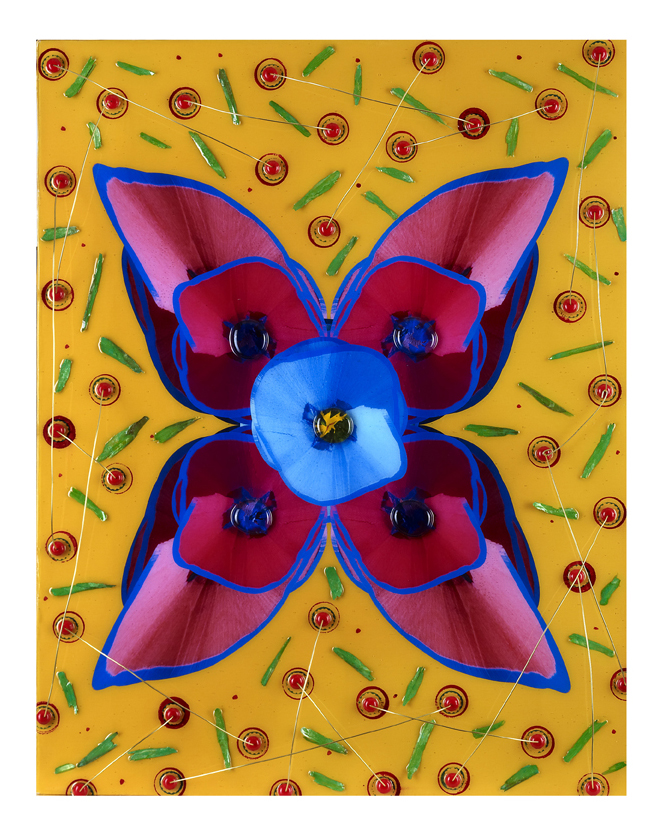
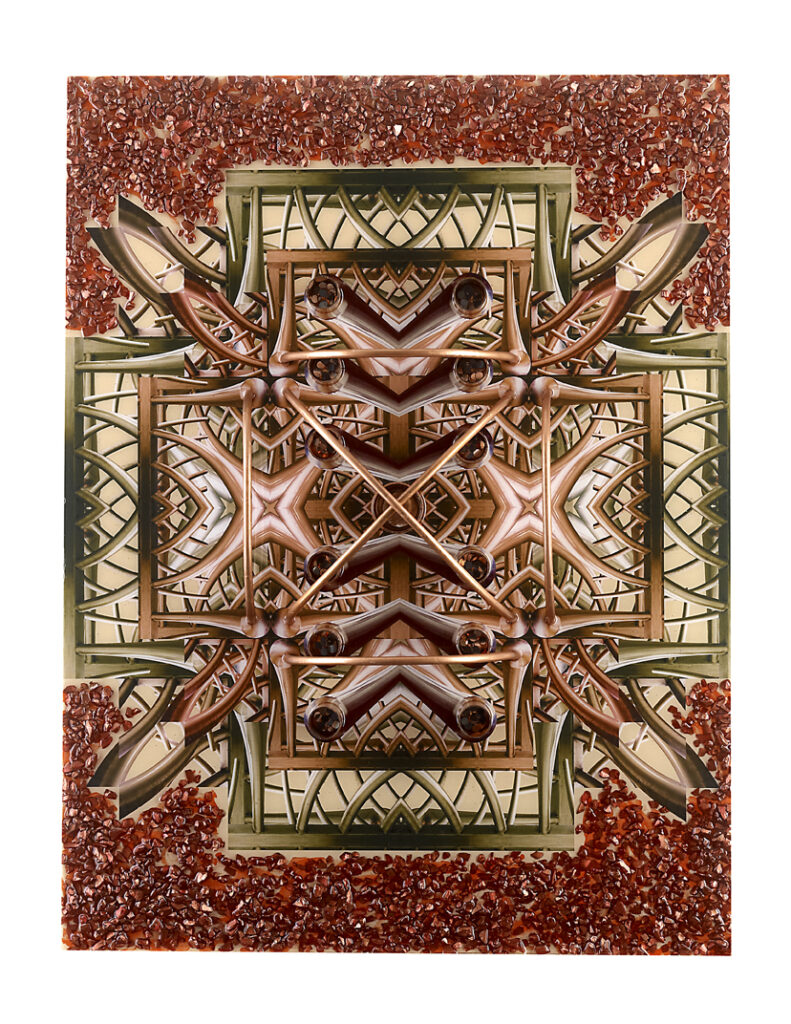
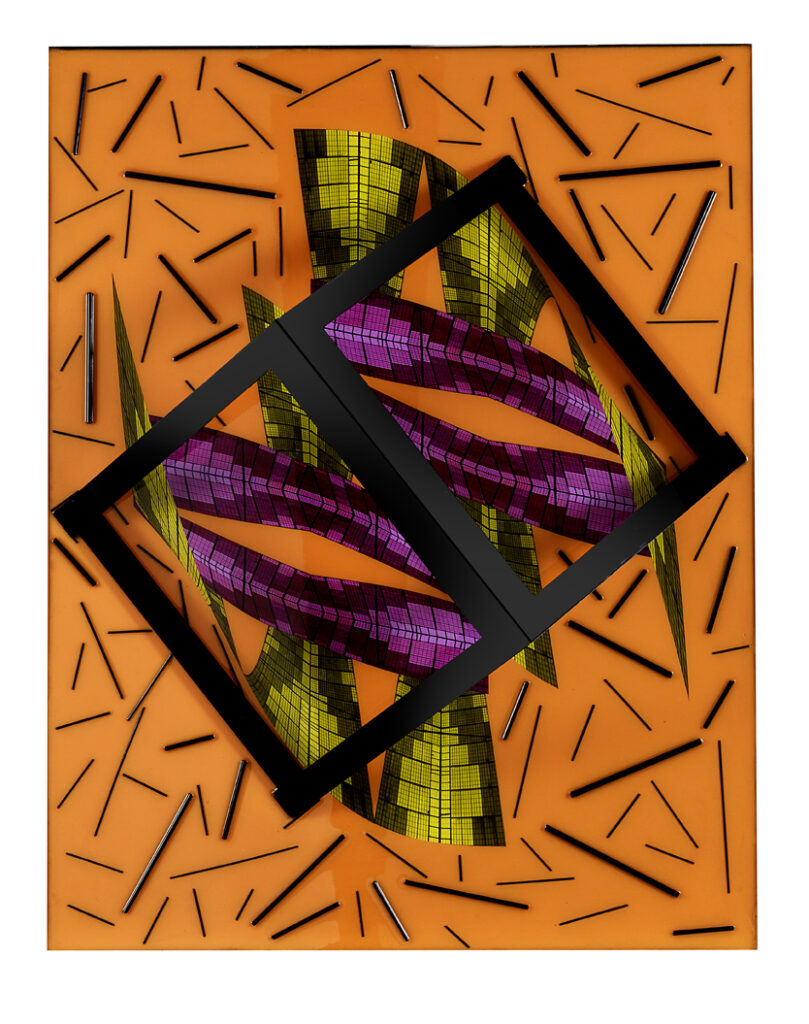
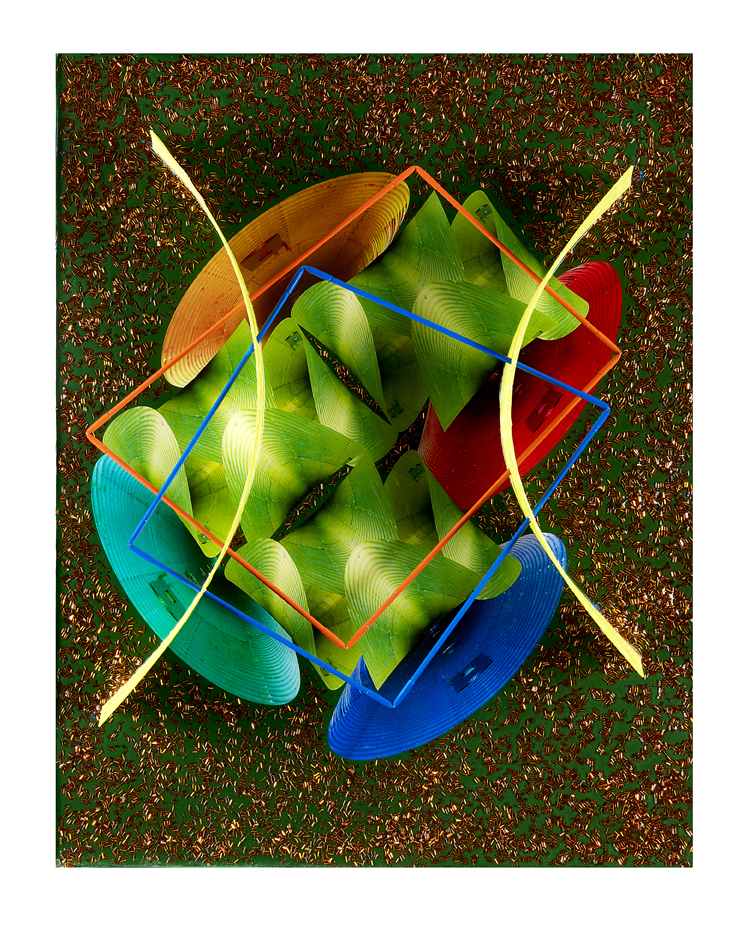
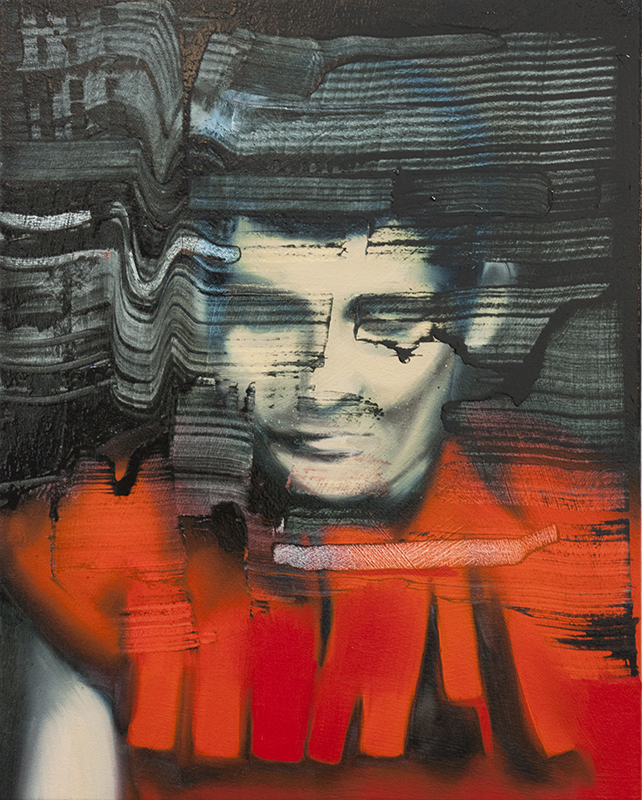
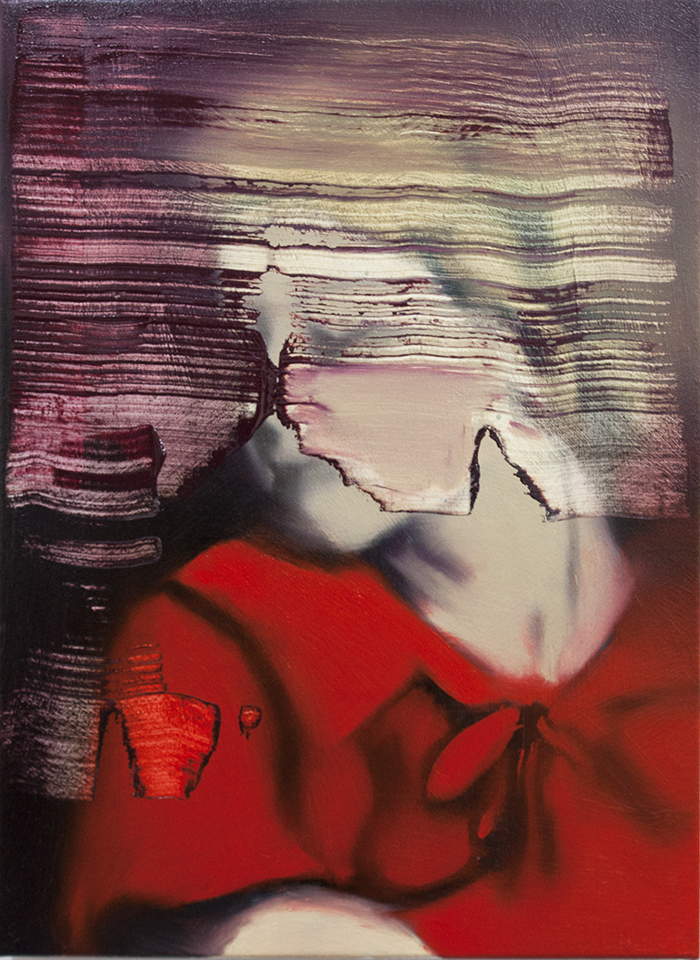
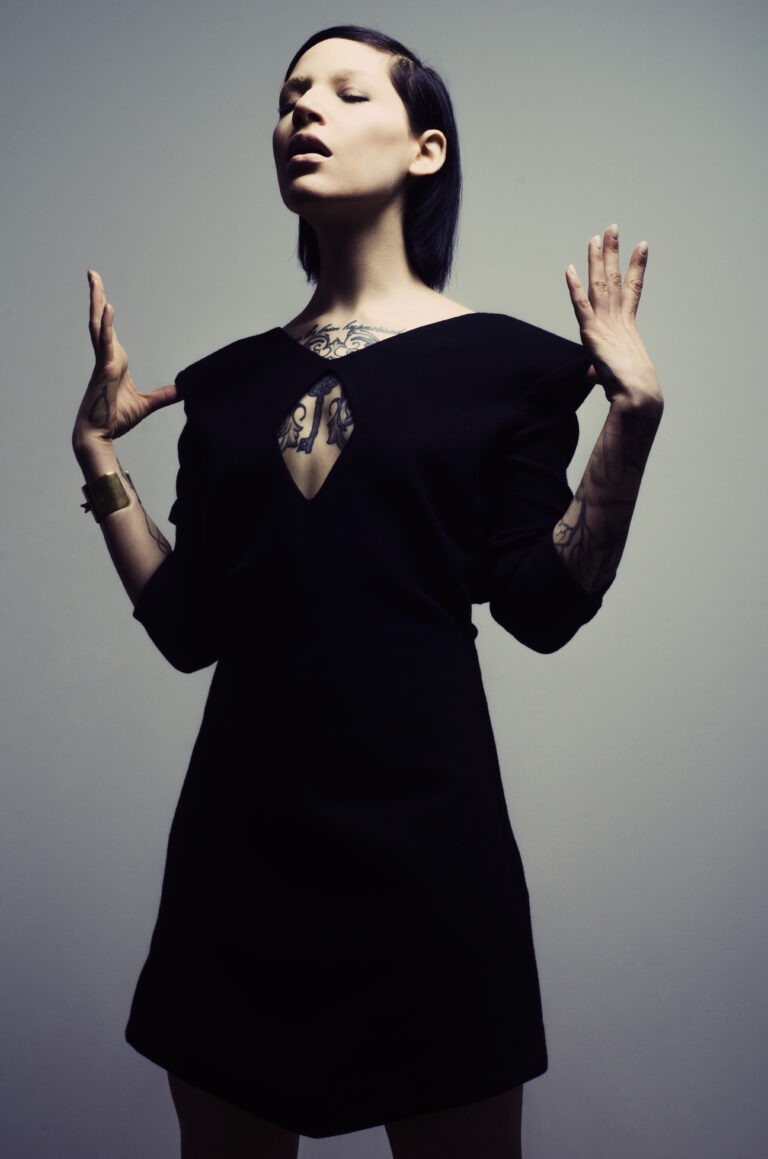
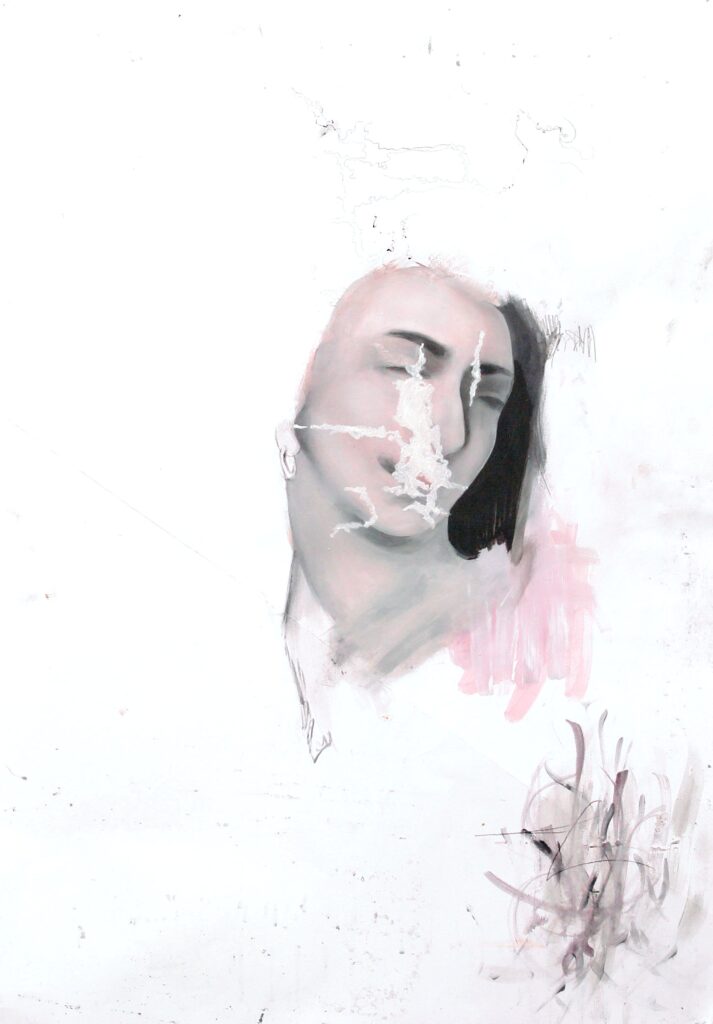
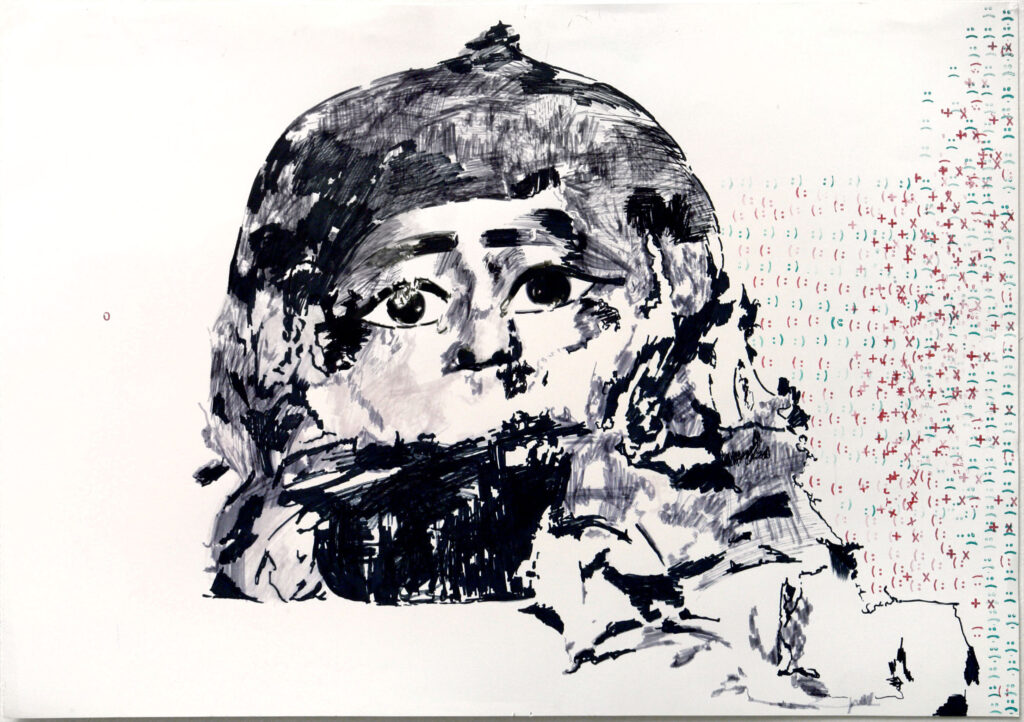
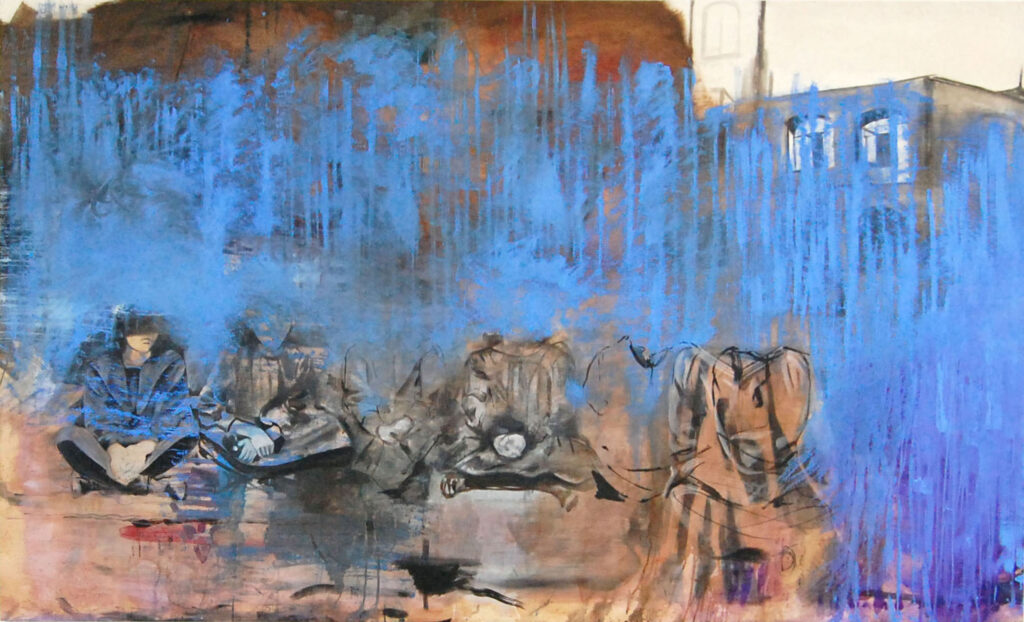
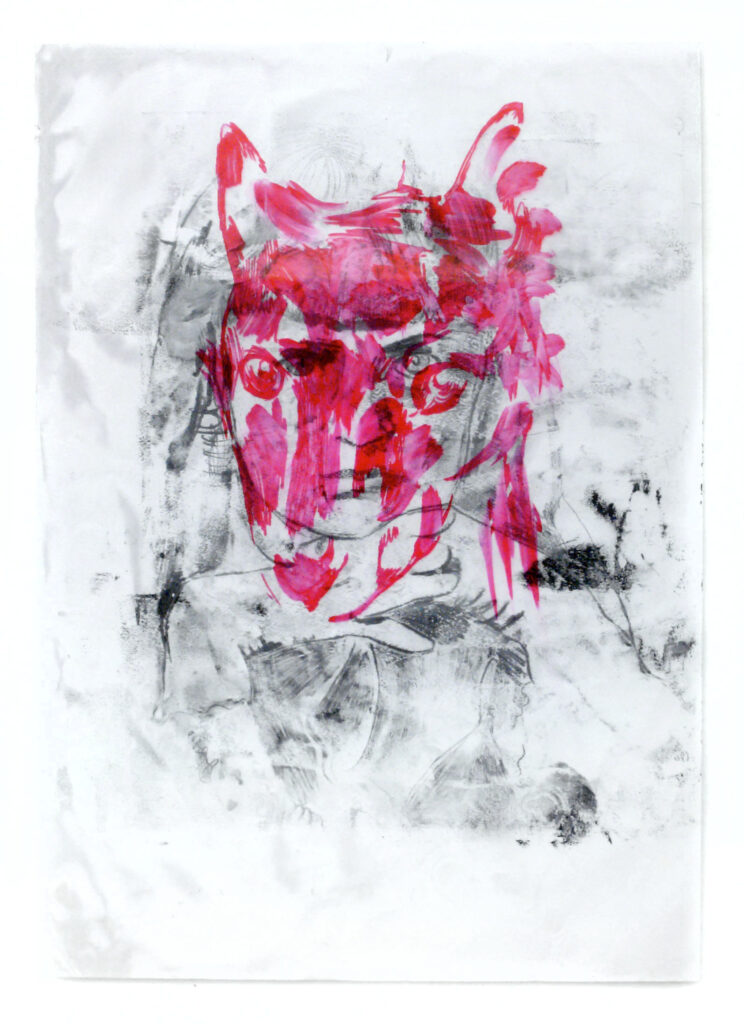
I have been a Still-Life Photographer in New York City, for almost 30 years; collaborating with Art Directors to shoot Advertising. Creating art is a way for me to have complete control of the image, from start to finish. Each piece begins with a photograph, which I manipulate in the computer, and then print. From there I build each one with found objects and seal it in liquid glass to create something unique.
My paintings explore the relation between daily life and human nature. I perceive humanity as a chocolate cake, where beneath the surface are those more intriguing and challenging mixtures, with fears and social pathology.
Through the application and process of painting, I cut a piece of that cake to explore the nature of these problems.
With simple, yet powerful gestural strokes and mark making, I search and re-investigate solutions to bring these hidden depths to the surface.
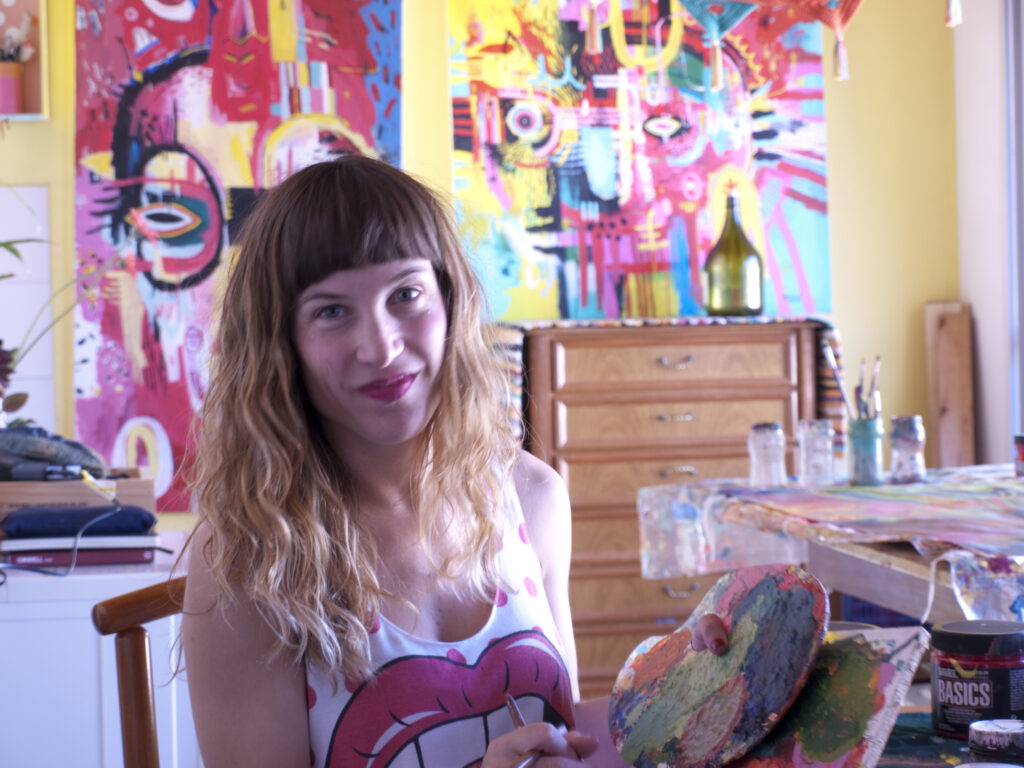
When I start my day in my studio, I want to listen to some music. It is generally not always the same. I also like to use some incense.
When I begin a new artwork, I used to use a special cardboard that allows the pigments and water too react in a special way; giving textures, shapes, deformations and then letting my imagination act freely.
The music always transposes me and my sensory part which takes me to an inside world, an introspective. It nourishes my imagination, it motivates me.
It constantly leads me to paint many of my paintings and I feel pleasure in that. I feel like I never want to stop doing this. It’s part of my life.
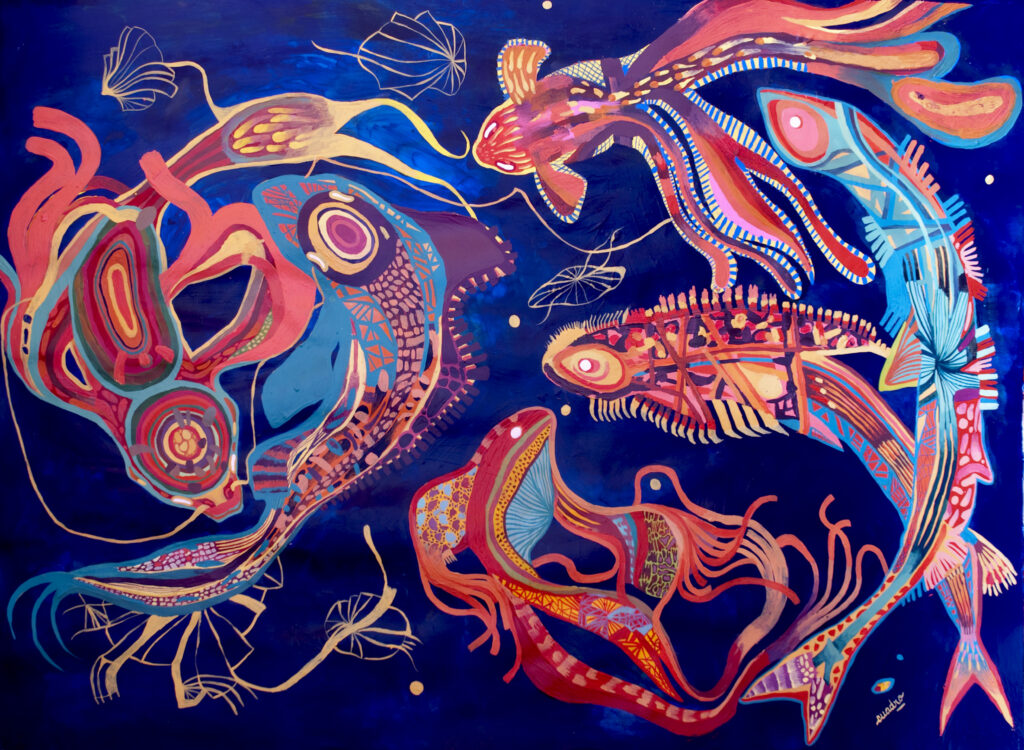
I used lots of techniques, like pencil, small coal and oil. Especially when I was young. Nowadays I like to use more than one technique at the same time, and make different results.
I use India ink with salt, and I let them act freely on the support. I use other things to generate texture, and I use oil painting, pencils and pens to realize details.
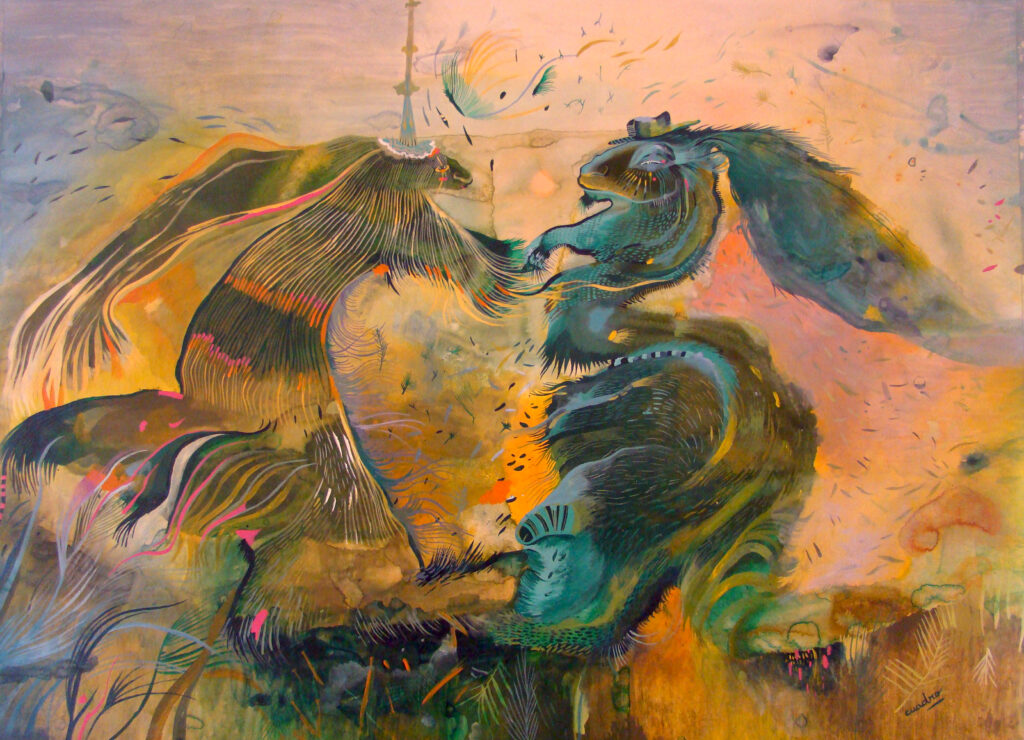
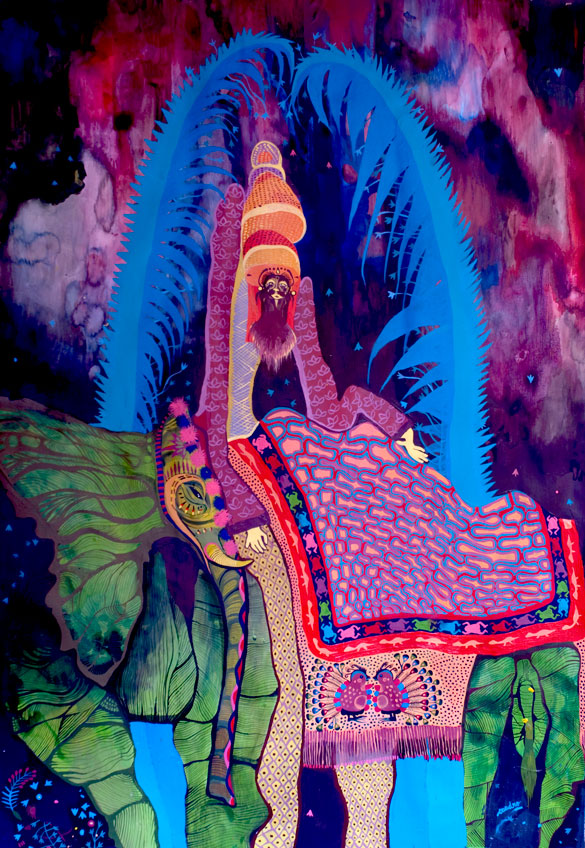
If I had to pick a style for my art, it would be quite difficult. Perhaps I associate my work with surreal art. My characters and their environment have nothing to do with reality.
The distorted reality is part of my inspiration, my contacts and my experiences. My artwork is based on the unconscious – all associated with my dreams, relationships & with life itself.
I don´t try to tell stories in my artworks. My work isn’t the realization of an illustration for a story, book or magazine (with a text behind the artwork). There are always ideas or suggestions (of a story) but it’s not a literal sort of story. I take fun in other people’s freedom in interpretation. I feel that it is important is to feel total freedom without restriction and without much precise meaning. I like to leave the interpretation of each piece to each person, you can get carried away like I do in every piece of art. Ithink each work has something special, they are part of my pleasures.
Each work is part of a sensory and emotional expression, for sure. I often think that the power of paint lets me express myself of many things that are somewhere in my head.
For example, relevant situations, dreams, experiences and thoughts that I keep (in my mind), I need to express them in some way, and doing it on a canvas is a perfect idea for me!
When I talk about a relation to my work as an artist, I mean that’ s the way that I have fun with the characters, animals and plants when my playfulness arise. You’re letting it flow! So you have to let go of the restrictions and really play with everything that is created, generating a new and unique artwork.
My inspiration comes from music, books, a good wine, plants, dancing while I’m painting and my small garden.
The narrative of an artwork is not something important for me. I want to do art without thinking, without restrictions, like art is for me. I think that the style is generated, created as one grows as an artist. Plus experience and techniques, the papers, the canvas helps form and then you feel comfortable (in that space).
I listen to many styles of music; I need that every day (to have a musical change).This change produces in me an energy and mobility different in my body.
I like pianist music, jazz, rock, hip-hop or ambiance. My musical panorama is very broad. I try to constantly meet new artists and new bands that are emerging. I like to investigate the soundtracks of movies and series.
Besides music, I love my studio; it is full of colors, pins, my favorite library and plants. I think the place (to create) is an important point when you are creating. I consider my atelier to be full of colors and visual incentives that help open your mind. I have a lot of travel objects, artist books and books from friends. Music for me is like my battery to start each day, but I love where I work. And another important point is that it has an incredible luminosity, overlooking a terrace where I have a small cottage and plants that I care much for.
I would say that the core passion about art, is to feel free, to have your mind open to all the new things that can appear.
Every crisis is a new starting point and always the beginning of something new and not something that ends.
My top list of people who constantly inspire me and the reasons behind it are:
Jean-Michel Basquiat: Because of his expressiveness, his loose strokes & his liberty.
Egon Schiele: His obsession for expression, postures & sexuality. His work tries to capture the sensuality of women and men.
Paul Klee: I love the choice for his color palettes, his compositions & his details.
Amy Cutler: Because I like her imagination, how she tells a story and her incredible levels of details. She creates strong characteristics via clothes, human expressions, hairstyles, animals and landscapes.
Pablo Picasso: I admire his versatility. It’s amazing how much work he was able to create during his life. I consider him as a genius. I love watching his videos and seeing how his imagination puts his art is in constant transformation – like seen in this VIDEO: http://www.picasso.fr/es/picasso_pagina_index.php
http://www.pablopicasso.org/
Frida Kahlo: Because I admire her strong personality, her passion, her ideology and her deep love for Diego Rivera. All of her art works were about her life and her physical & mental pain. She was a fighter, yet a very sensitive one who created a lot of wonderful art full of color.
I’m an artist from Brazil. To write about my work, I need to talk a bit about my life.
I’ve studied architecture in the university but art was always a part of my life. At that time I did courses of drawing and watercolor with important artists in Brazil. I’ve participated in collective exhibitions in the main museums of Sao Paulo, MASP (the Art Museum from SÃo Paulo) and MAC (Museum of Contemporary Art). After graduation I decided to work as an architect, but I kept drawing and painting.
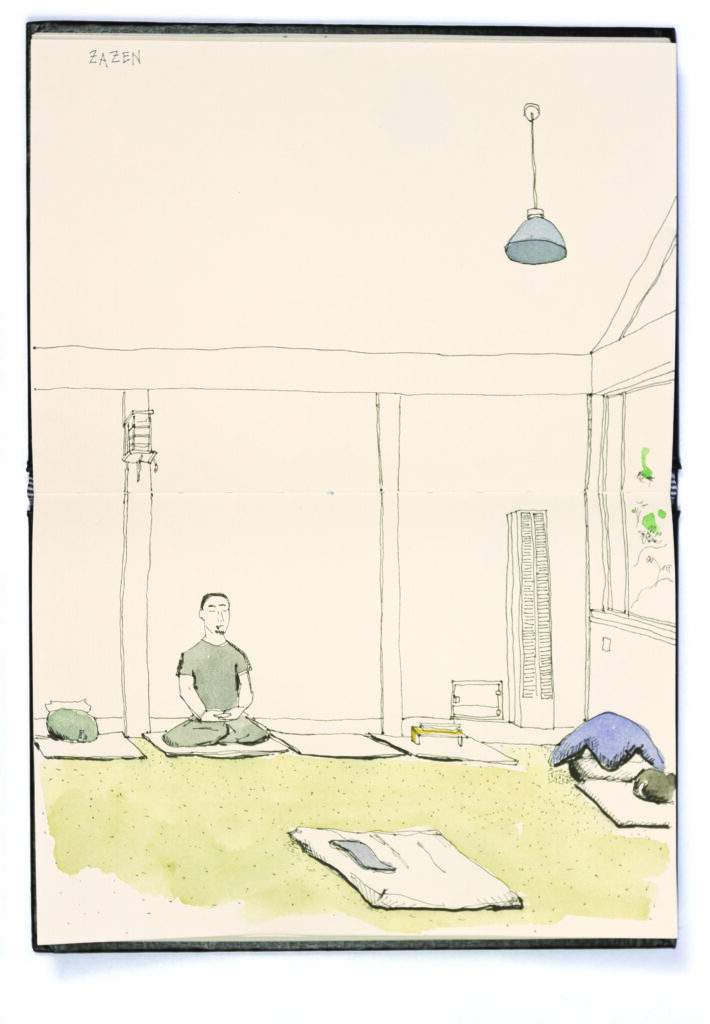
After a while, I was not happy with how my life was going. I felt that working in the architecture office was boring and I decided to work with graphic design and illustration. I also started my practice of yoga. I felt that yoga helped me to be more present in my body and mind. After a couple of years practicing yoga, I went to a Zen Yoga retreat and it was a turning point for me. But actually I felt that I found something that has been always here. After Zazen (the zen meditation), I felt that my perception was amplified and my body and breathing was similar to how I usually felt after drawing.
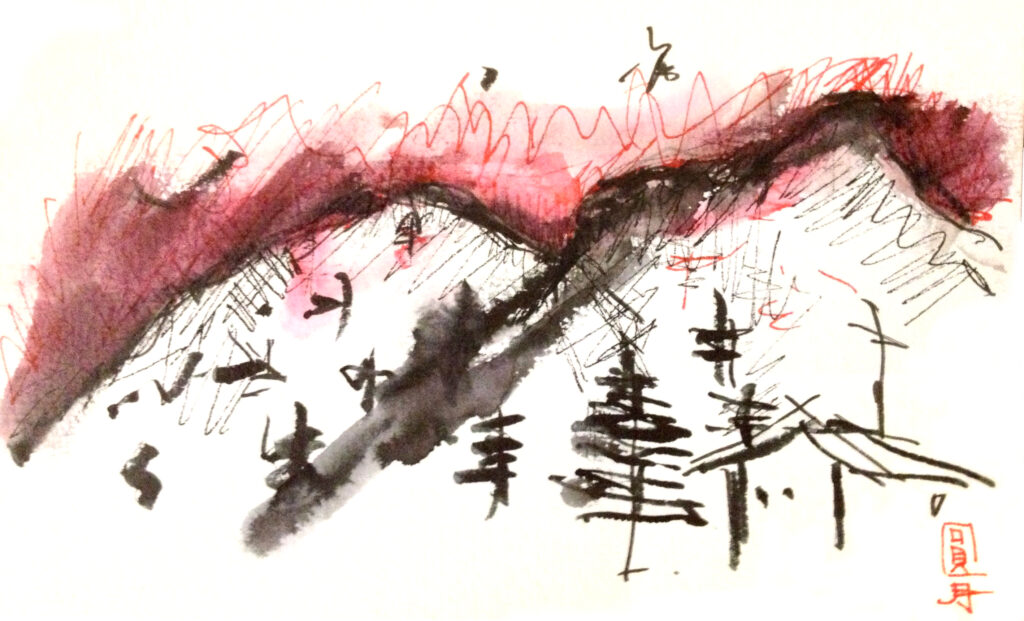
I also realized that there are many aspects in common between the arts and zen. When I learned watercolor, it was the contemporary approach of that, and it is based in the principles of brush stroke, line, point, and stain. It is the importance of each element and also how the brush touches the paper. Also, you can’t change what is on paper, just work with what’s there. Zen is about how you can be really present in the present, conscious of your body and mind. And the work with watercolor is also about this presence.
Zen is a constant practice, every moment you return your attention, and in this constant exercise you may be able to be in the present. But if you think that you are special and that you may have achieved something, you already lost it. In parallel is a constant practice that makes drawing and watercolors come loose, and with that, the eye, the hand and the subject that is painted can integrate. Who observes who? And who paints what? What manifests when we are really integrated in what we are doing? When we observe reality and can see things as they really are and not as we think it should be, this is Zen, or this is Art, or simply, this is Life.
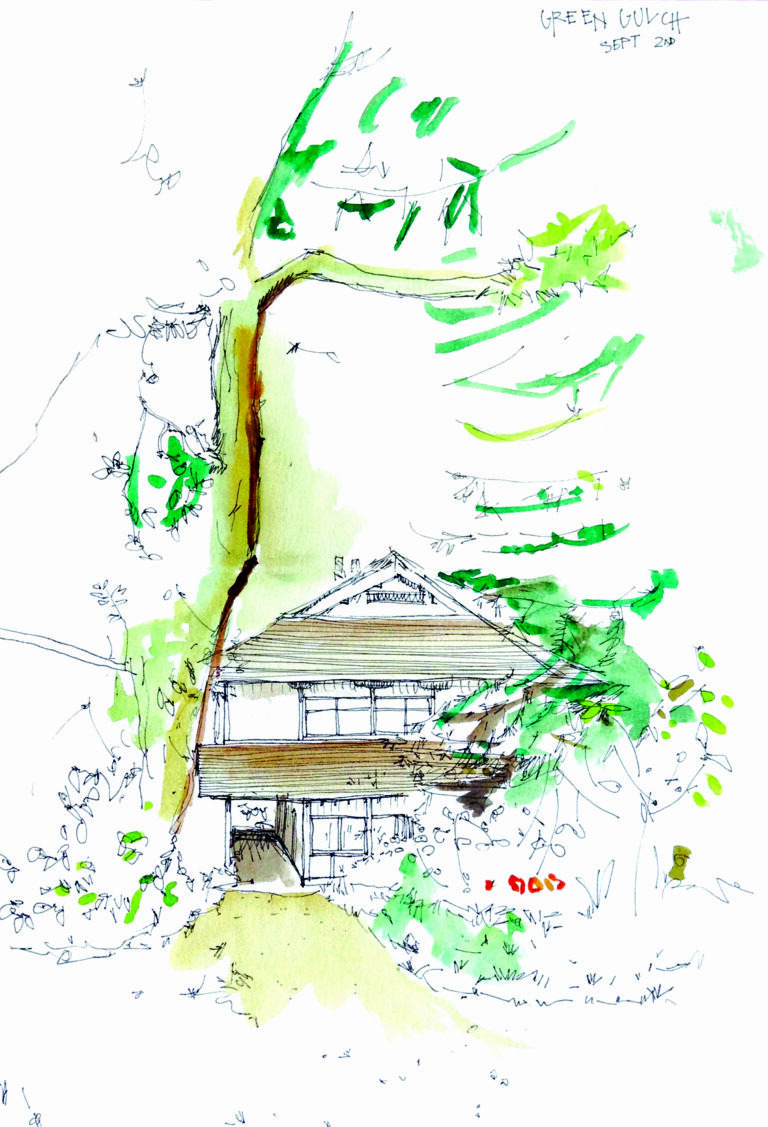
Another important aspect is that I love to travel and explore new realities. And drawing during travels is a great way to be in the places. It’s about the timing of drawing and how people interact, and how you can see more things. So, together traveling and drawing has been a new way to explore the places where I’ve been and also to deepen my art.
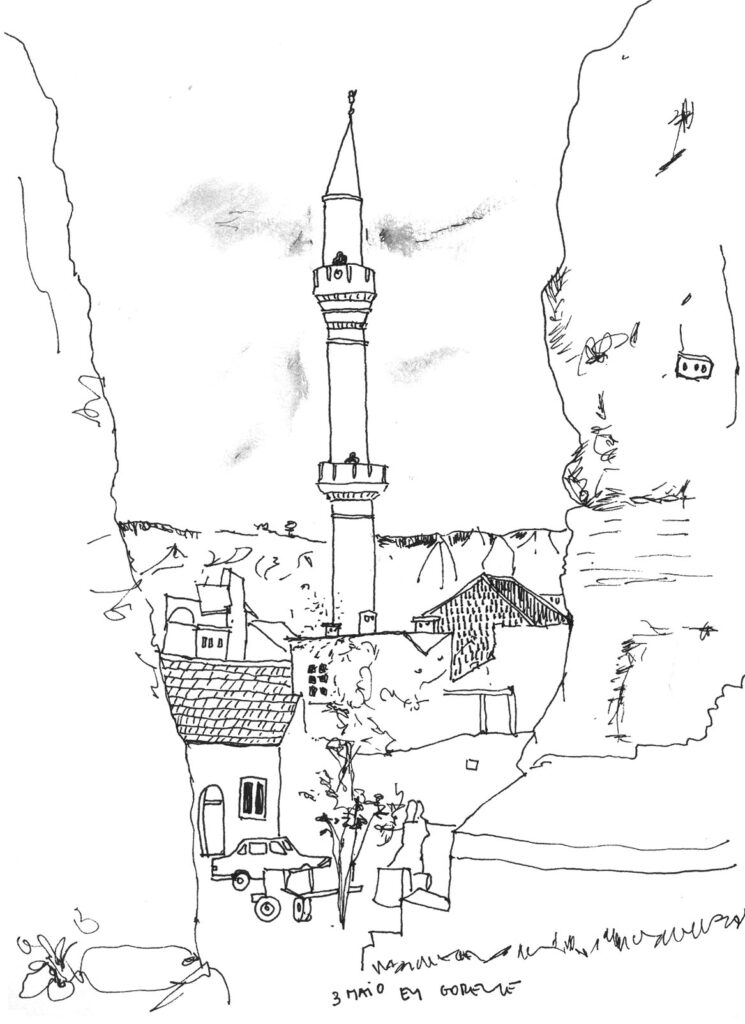
In 2010 I traveled to Turkey and at the time was reading UJI, The time being, a text by Master Dogen, the founder of Zen in Japan. It was at that millennial scenario, exploring the ruins and experiencing that landscape, that I was feeling another dimension of time. After that trip I could not fit in anymore in my day-to-day work-home-work routine and I began organizing a new journey for me. It took a while to see how it would be, but it came.
In 2013, I started a journey through the United States and Mexico with the purpose to deepen my practice of Zen and Yoga. I also reported the journey through my blog where I write and draw on that experience. Initially I spent three months in Yokoji Zen Mountain Center (www.zmc.org), then I visited the Sweetwater Zen Center (http://www.swzc.org) in San Diego, San Francisco City Center, and Green Gulch Farm in Marin Count (both http://www.sfzc.org). Then I went to Mexico where I spent three months in Guadalajara at a school of Kundalini Yoga.
I returned to California to Grenn Gulch Zen Center for intensive training and from there went to NY, where I visited the Zen Mountain Monastery (http://zmm.mro.org), Zen Center which is 3 hours upstate. I attended a workshop with the artist Ross Bleckner and after that I spent 10 days in Fire Lotus Temple. After that, I went back to Brazil and spent 5 months preparing to be back in the States. Now I’m in San Francisco, and for now I’m working to find a balance between my zen life and my regular life. Being in the city is a way to find a mid way.
My blog is http://www.enguetsuenglish.wordpress.com/
I also created a way for people to participate and help me on the journey with the Pieces of the Way (http://enguetsuenglish.wordpress.com/pedacos-do-caminho) , people can order and receive a postcard that I draw and write, telling something that I’m living and learning.
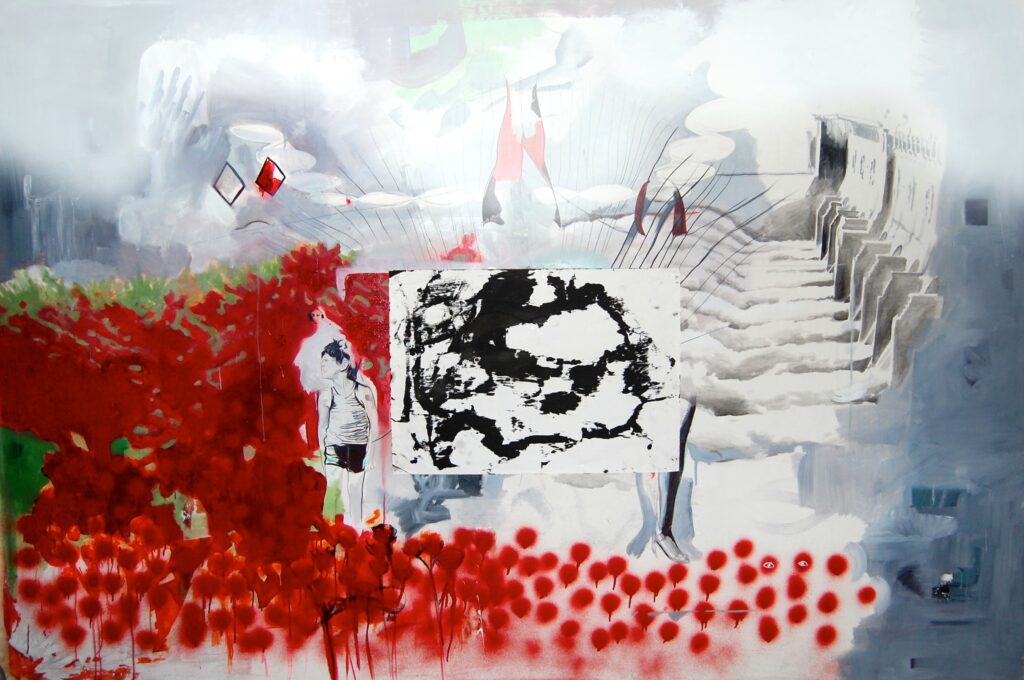
Compositionally reminiscent of the work of David Salle and certain sculptural gestures in the oeuvre of Jasper Johns (especially during the 1960s), Düsseldorf-based artist augments these precedents with a decided flare for digital aesthetics. Digitality pervades her works, where the juxtaposition of elements that only becomes visible by way of a computer screen acts as a kind of specter haunting the traditional media of oil on canvas. Whether one calls this post-internet painting or proto-digital painting, Julia Dauksza’s artistry is distinguished by sprawling diasporas of figures fixed in mural-like space, like images suspended in pure virtuality, foisting on viewers a level of uncertainty where they have to interactively fill out each work—co-creating it, as it were.
In Dauksza’s large-scale paintings one notes a tendency to deny any single vantage point; a compositional strategy that could be misrepresented as distraction, but which is better understood as an effort to disrupt any pretense of contemplative stillness. There is no where in her work; rather, there is a being-there in a tactile or iconographic way. The figures peopling her canvases, revenants of assembly-line industrialization, have a shadowy aspect about them, like pools of nothingness emerging from the perspectival depths of digital space, which works to both link and separate the scenes so hauntingly portrayed by her paintings.
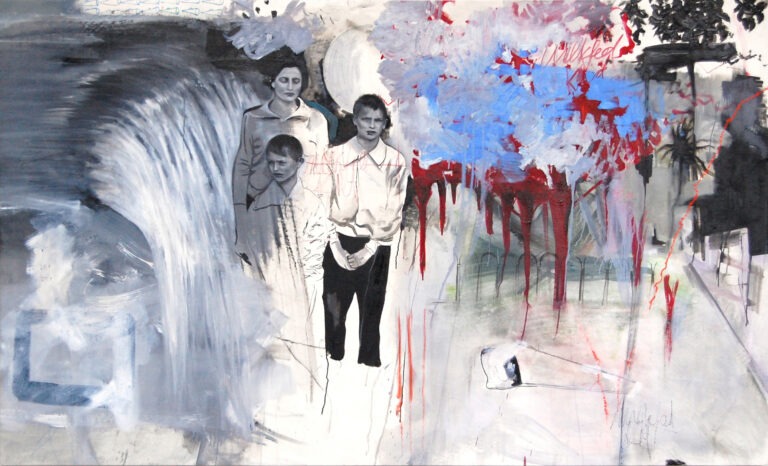
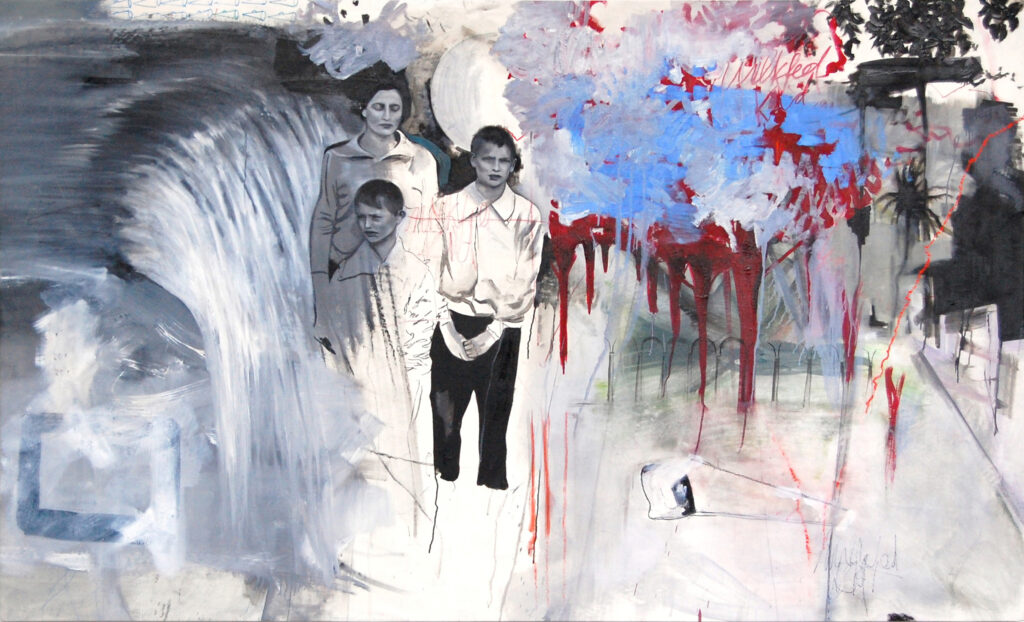
“Milkfed†(2013) offers a particularly representative example of this. The newspaper grey tones filling out the two boys with their mother, along with the truncated waterfall beginning at the painting’s leftmost edge, indicate a life populated by stand-ins, signifiers bereft of signifieds, where the nebula of red and blue abstraction near the painting’s center contrasts vividly with the effacement of figures locked in representational space. The painting is rounded out by an item of constructivist abstraction to the bottom right and the introduction of suburban, landscaped foliage at the upper right-hand corner. This merging of the photographic and reproducible with the abstract doesn’t so much complete the painting as give it jagged edges, supplying the requisite tension for figures to appear in the process of their own disappearance.
Art is the only messenger that customizes the message to the understanding of the single individual. Visual art’s expressions are tailored to solicit particular responses. Every great artist is born with the ability to guide without manipulating the viewer’s emotions to an understanding of the passion, the sadness, the sentiments, the speculations, the anxieties, the love and misunderstood tendency of a class in society that the orthography, the semantics and the phonics of words cannot epitomize.
Today visual art in New York City has become an accessory of luxury and much too its dismay, many so-called artists are doing nothing more than interior designing. Art unfortunately is treated like real estate and traded like stocks. The brokers are eager to make a fast profit and the artist is looking to get rich. This leaves no time for the proper development of the artist; it does not allow the artist to find themselves, it does not allow the artist to interact with the world and be inspired by their natural elements of emotions.
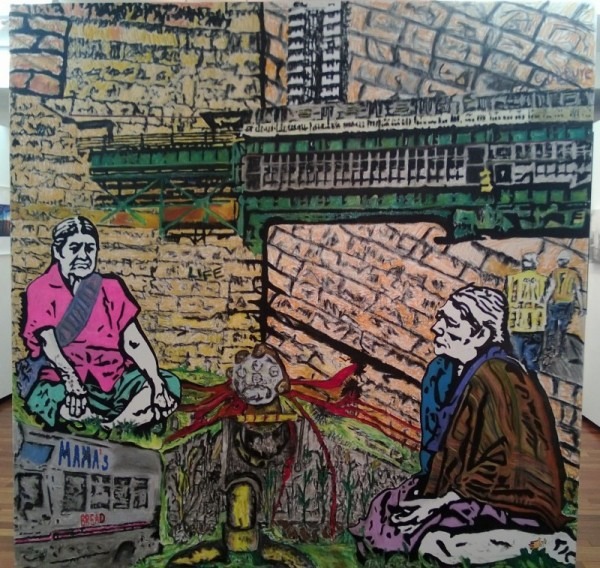
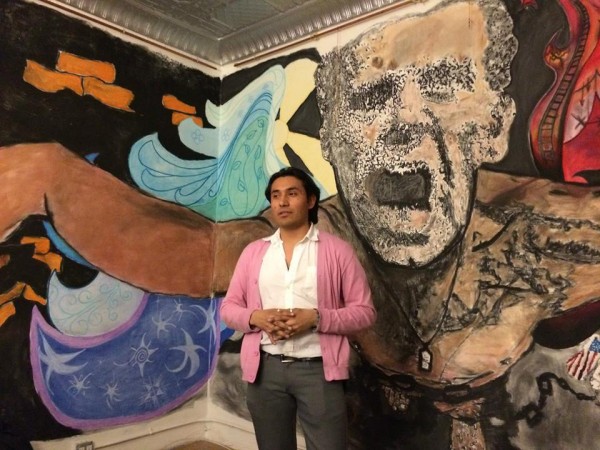
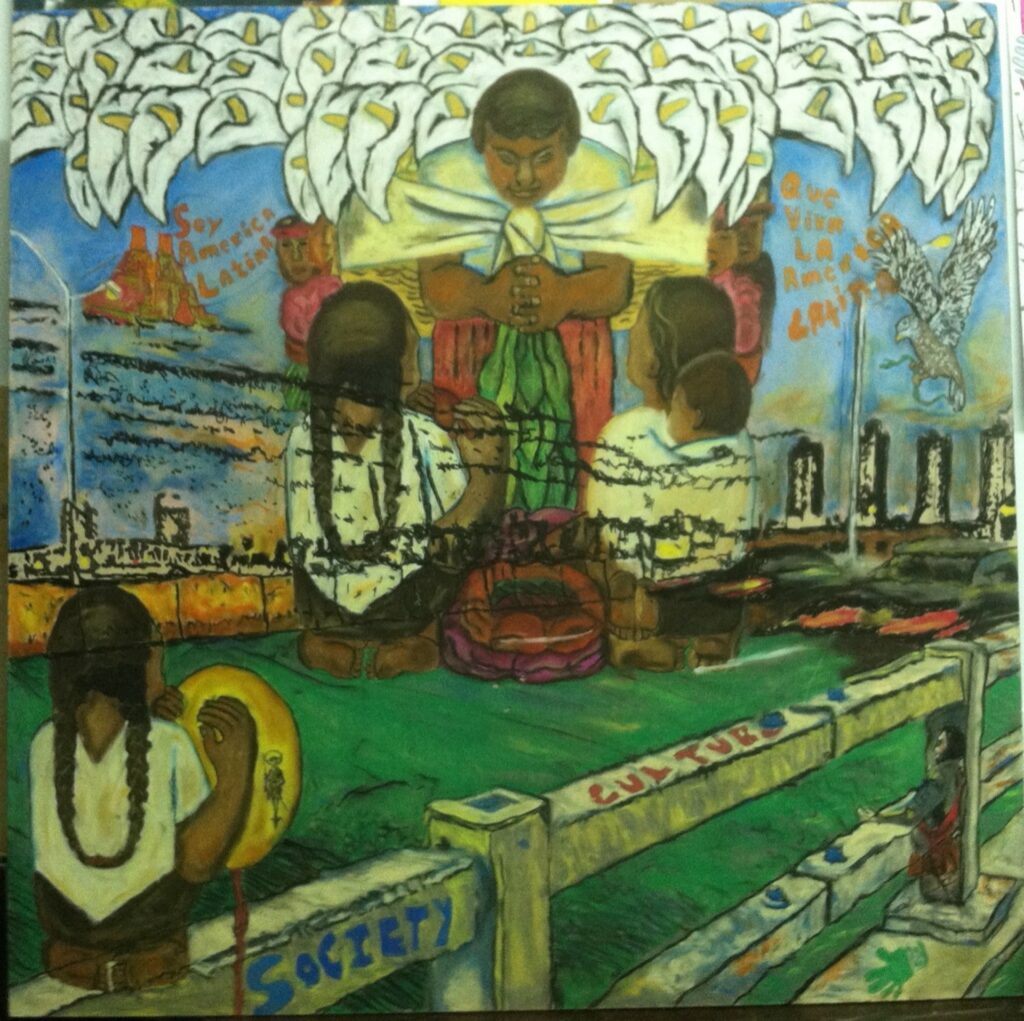
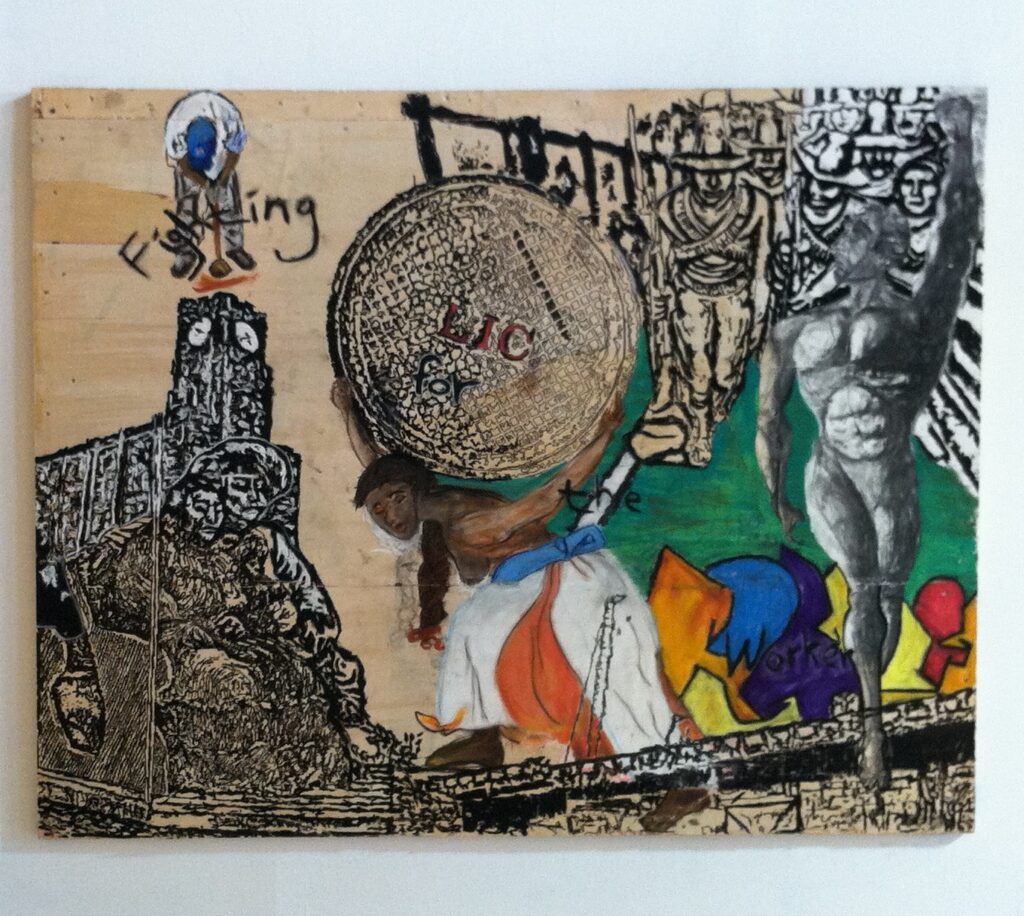
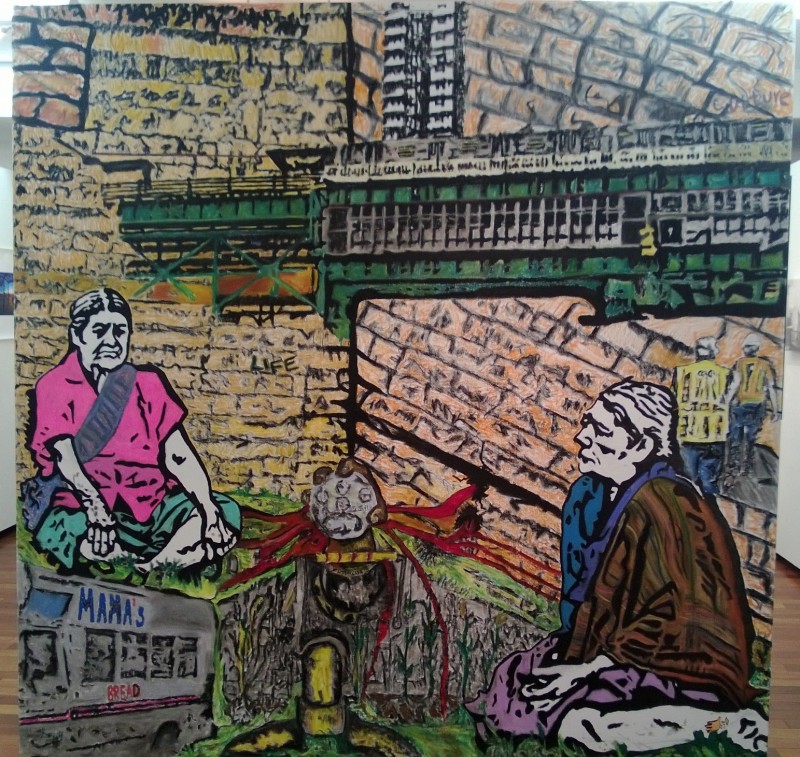
Unlike many artists throughout New York City, Gabino Abraham Castelan’s exceptional vigorous works is a luxury available to everyone, especially those who inspire it. Castelan has painted murals for all in Harlem to enjoy. His work as he says “is a representation of the working class in the city and what their hard work has created.â€
“I want to show†he says “their culture, their conditions but most of all, the manner they celebrate each day through everything.â€
In his work titled Paradise under Construction, the viewer travels back to the beginning of the New World. We are shown a Native American working in the field and we progressively move forward into the industrial age of America and finally we see in the center of the piece the colors of the modern day construction worker working.
When I sat down with Gabino Abraham Catelan at his studio, I ask him about his expectation, his experience, his technique and life. When asked what his expectations as an artist were, Castelan’s response was surprising, mainly because of the honesty and humanity in it. “Let me tell you something,†he said, as he leaned forward on his seat, “I’ve come to accept that I am not here to change the world with my work, nor am I trying to change anyone’s view of it. I just want to show people an interpretation of what I see, the struggles of the working class, I don’t want to change things but I want to open a dialogue, so that everyone can be involved in trying to find a solution to different issues that we face not only here in the city but also around the world.â€
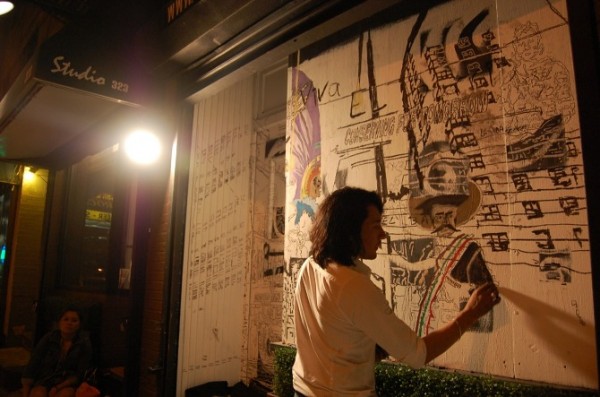
“I want to unite people with my work,†Castelan said as he opened a beer and handed it to me. One night in 2012,†he said, “I was working on a mural titled Conserving for Tomorrow on the outside wall of a gallery in Harlem called Studio 323. I designed my images at my studio and then used my laptop and a projector to help me paint at whatever location I’m working at. On this night,†he said, “as I was working, two young men approached me, one on foot and the other on a bike. The one on foot grabbed my laptop and ran; not far.†He said, “He didn’t realize that it was plugged into things and tripped on the wires. As he laid on the sidewalk I took a deep breath and walked over to him. This boy was confused; I think he was unsure of what I would do so he just stayed there on the ground. So I extended my hand to help him up.â€
“When I asked him what his deal was he said to me. ‘I’m sorry man I’m hot, I hungry and I’m in the ghetto’ when he said that,†Castelan continued, “I saw myself in him. He gave me my computer back and I gave him the only two dollars I had left. I told him that I understood him, I said to him I’m from Harlem too. He asked me what it was I was doing and I explained to him the concept of the mural and how this was painting for us, a vision of everything he was feeling. He walked back to the mural and just stared. When I came back the next morning the same two young men that try to rob me the night before were there waiting for me, they approached me and asked if they could help me with the mural. And that’s what I mean when I say that I want my work to unite people.â€
Castelan continues to grow as an artist moving on to creating installations with movement yet without losing his core message of the struggle of the worker; he incorporates lights, projectors and objects associated with the life of not only the worker but the city herself. Gabino Abraham Castelan’s compelling work is a reminder that art should not be kept from anyone. It’s alright to treat art like a business and make a profit from it but let it keep its humanity. After all, art’s true process is to remind us all to be humane to our humanity.
For information on Gabino Abraham Castelan’s work please visit www.gabinocastelan.com
The art of Chin Chih Yang is nothing if not social. His projects almost function like small corporations—if by “incorporation” one understands dynamic, voluntary associations not geared toward profit.
His work anticipates a world where groups come together without privatization, simply to participate in a shared goal. The interactive nature of his performances is inseparable from their message, which often addresses ecology, globalism, and interconnectivity.
At its core, Yang’s work attempts to salvage human connection from the alienation produced by spectacle and the technologies that sustain it.
I recently sat down with Yang to discuss the social nature of his practice—how it involves groups, and what interaction means in the context of the messages his work communicates.
Interview
Jeff Grunthaner: Your practice is highly interactive, and your projects often involve audience participation. How does this come about?
Chin Chih Yang: As an artist, I’m always looking for something that is not just interesting to me, but something that challenges my habitual way of thinking. Involving other people—and their reactions—is essential to how my performances impact them.
There’s a lot of experimentation in this. I may not fully understand the outcome of an interactive performance, but I am drawn to the possibility that something real may happen—an event in real life.
JG: Performance art sometimes approximates painting or sculpture, in that it’s still something viewers observe. Does interactive work need to reject traditional media?
CCY: If I use traditional forms—like painting or sculpture—it doesn’t really work for me. Some artists create something visual and then attach text to explain its meaning. I don’t connect with that.
If a work truly involves the audience, the message communicates itself. When I started, I worked more traditionally, but over time I shifted toward practices where I don’t fully know what will happen. What I can visualize is how people will engage.
JG: In your performance Kill Me or Change (2012) at the Queens Museum, you created something like a temporary, collaborative structure. Can you describe that process?
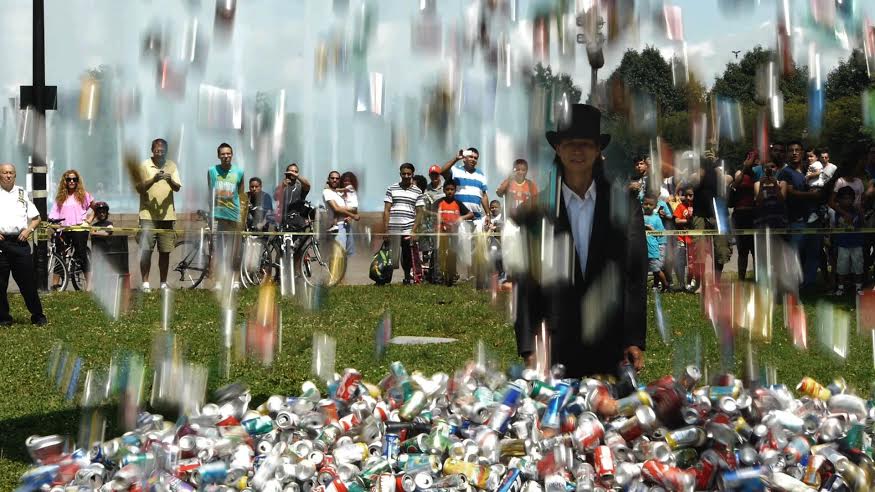
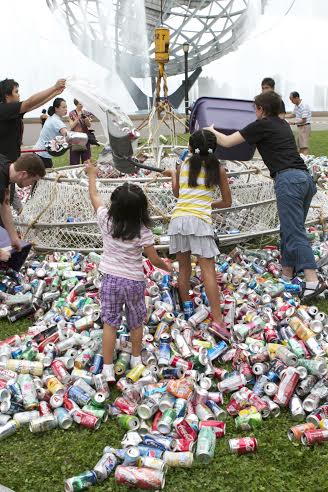
CCY: It took me four years to fully realize Kill Me or Change, which addresses consumerism and global pollution in a dramatic way.
Every part of the project involved collaboration. While working as an art teacher in New Jersey, I invited students and their parents to collect cans. The process became a way for participants to understand that their relationship to objects is also a relationship to global networks and connections.
JG:Prayer for Haiti (2010) was also highly social. Can you talk about that experience?
CCY: Normally, Union Square is full of people. But that night, it was minus 7 degrees—very cold—so turnout was lower. Still, many people participated.
When we walked to the Haitian Consulate, others joined us along the way. That level of participation is how I measure success.
JG: I remember someone asking what the project was about and responding critically. How do you see the relationship between your performances and real-world action?
CCY: Talking to people face-to-face is much more powerful than consuming media. Everyone watches the news, but that doesn’t always lead to action.
When someone connects with you directly, it creates a more honest response. Affecting people emotionally is what matters most.
JG: In your work, people interact not just with you, but with each other. How does that connect to your message?
CCY: I want to critique society, but not in a way that feels like a lecture. I don’t want to say “Donate” or “Reject consumerism” like a politician.
Instead, I create events that spark curiosity. People stop, watch, and sometimes join in. That moment of engagement is powerful—it stays with them longer than something they see on TV.
JG: What are you working on now?
CCY: My main project is Watch Me, We Can Do It!, which I hope to realize in Central Park.
It will involve many different people—technology specialists, helicopter pilots, even a personal trainer. I may collaborate with a rescue association and possibly larger organizations.
Even as a relatively small artist, I believe I can create large-scale collaboration. That sense of organization is central to my work.
Even if the project fails or is misunderstood, that’s okay. It’s something I can offer to people—a kind of signal or possibility.
Gallery
Image 1 Kill Me or Change Interactive Performance & Installation Queens Museum of Art, 2012
Image 2 Kill Me or Change Interactive Performance & Installation Queens Museum of Art, 2012
Image 3 Human Sculpture II Interactive Performance Queens Museum International 4, 2009
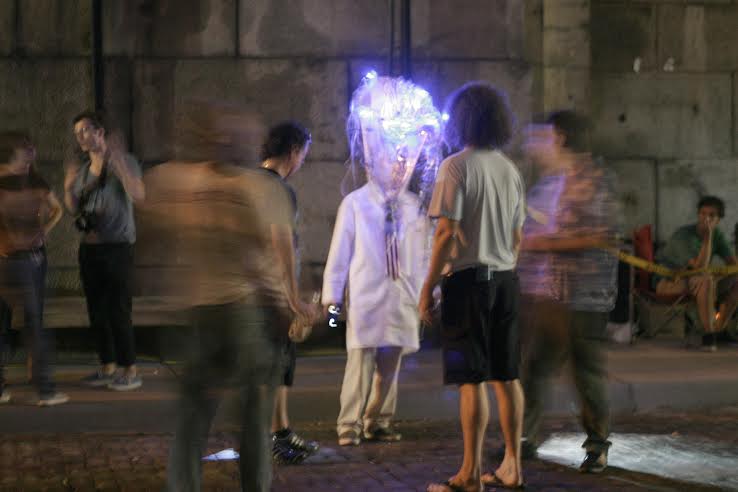
Image 4 Broken Mind Roving Video Projection / Interactive Performance Dumbo Art Festival, 2010 Photo by Matt Taylor
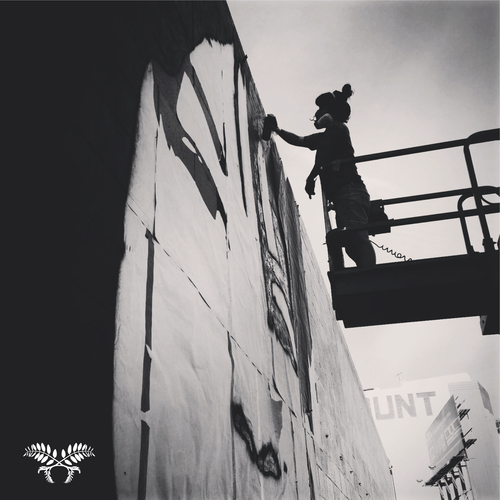
Jessica Sabogal is a first generation Colombian-American graffiti artist in residence at the Galeria De La Raza in San Francisco’s Mission Area. There you can view her art until 6:00pm and there on comfy couches we sat to discuss her work.
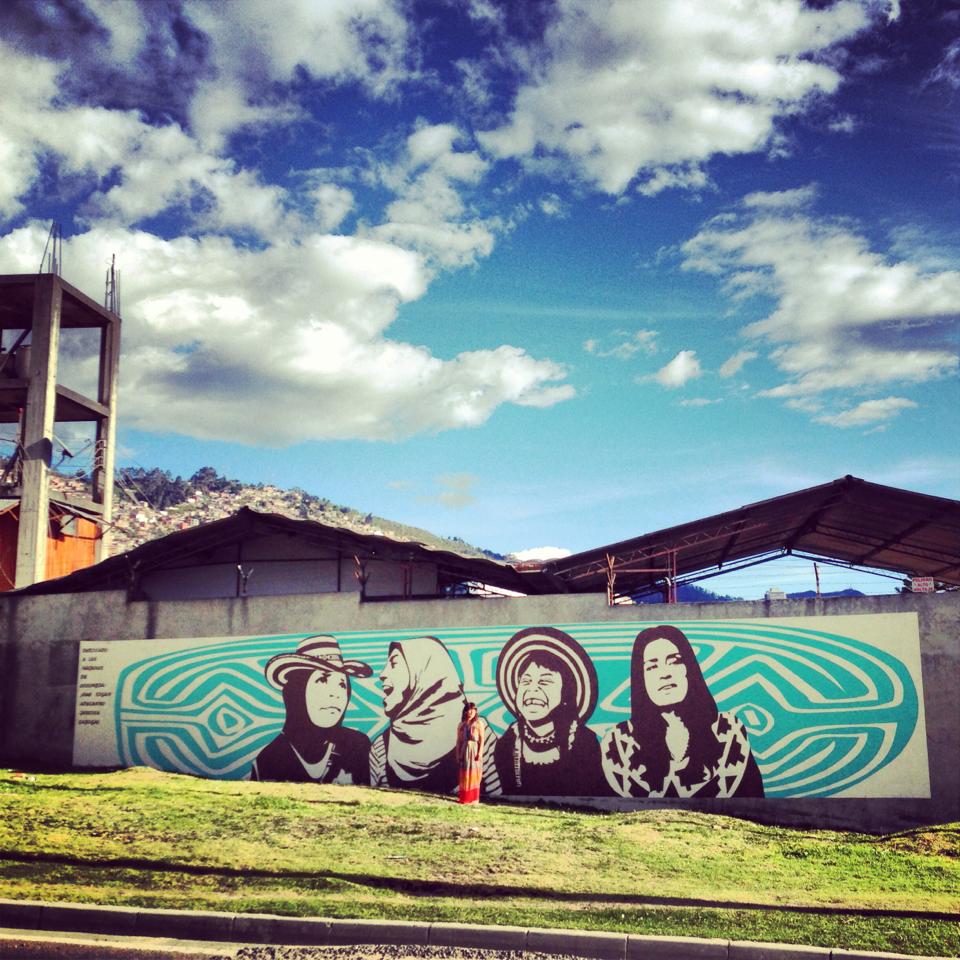
We came to the gallery in the afternoon to view some stencils for a mural Sabogal is currently designing for the Montreal based, artist’s collective she has been selected to participate in; Decolonizing Street Art: Anti-Colonial Street Artist’s Convergence.
The large-scale Canadian convergence focuses on individuals of both indigenous and postcolonial settler origins and seeks to bring attention to the wide spread and specific struggles plaguing these communities.
The chosen artists already disclose a political interest in their work relevant to the focus. With a fairly wide variety of on point topics to choose from, I was curious about Jessica’s direction. Though she won’t yet reveal the full scope of her plans, she tells me the mural will deal specifically with indigenous women’s rights. This is a topic that nicely marries the subject provided and her personal interests.
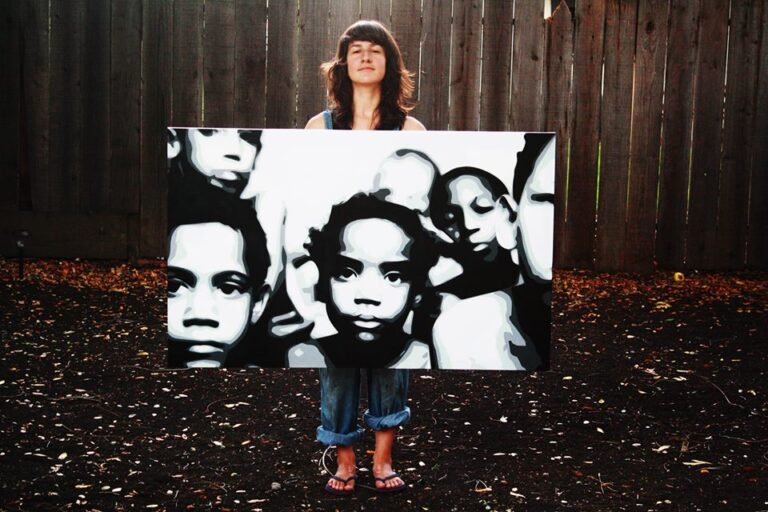
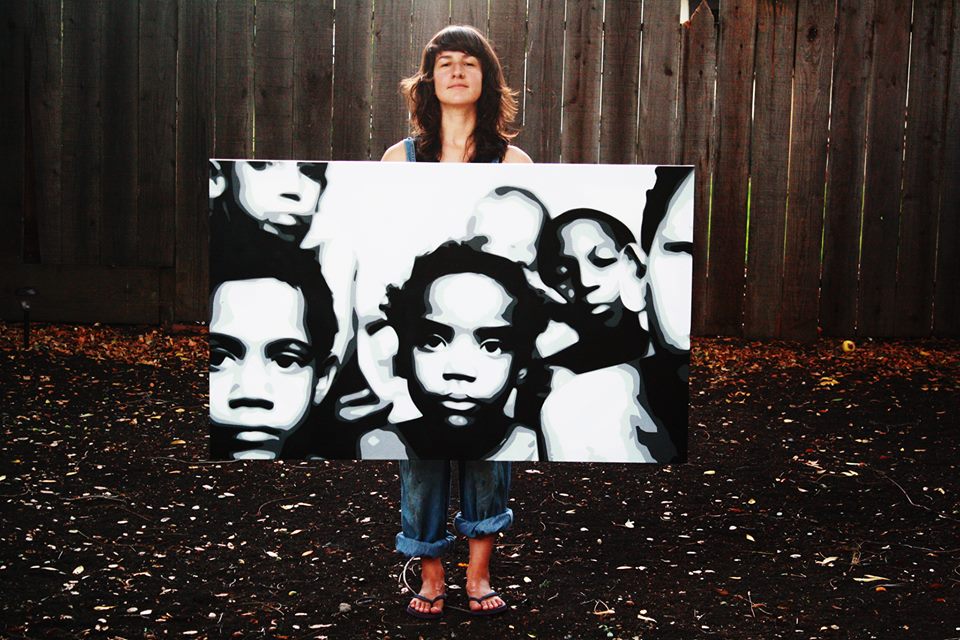
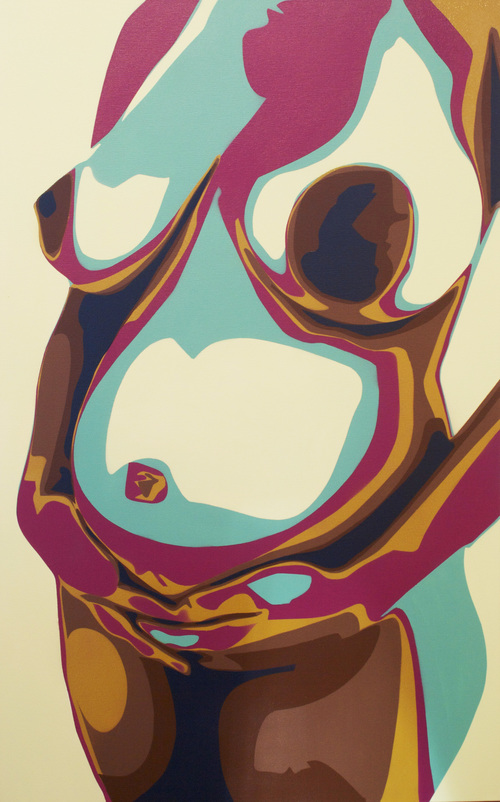
Sabogal’s latest series, Women Are Perfect! came to her during the birth of her nephew. She was amazed by seeing first hand the power and strength of a woman’s body and simultaneously heartbroken by the violence of the war against women’s bodies in a global setting.
Her work speaks of women as an independent, self-sustaining, and powerful gender and she takes it upon herself to bring light to the violence suffered through the untold, individual stories. Through the series Sabogal seeks to demystify the female form and bring to light what it is from a medical-biological understanding. It is to detract from the mainstream vision of a robotic and inconvenient understanding of the female body and its sexuality.
Sabogal’s work has always depicted a strong political influence, and through the years the message has gained in both subtlety and potency. Her strong ties to identity play a strong factor in her ever-growing body of work.
Sabogal works in the Mission Area, ground zero for the gentrification conflict, a conflict plaguing communities of postcolonial settlers. It’s a battle zone between Silicone Valley and the communities that immigrated here generations ago. In contrast, Sabogal was the first female artist commissioned to design a mural by FaceBook headquarters in Menlo Park, CA. Her new age, multifaceted perspective takes into account both the need for growth and the need for roots and stability. Her roots as a first generation Colombian – American woman and her opportunities as an up and coming young artist juxtapose starkly against the backdrop of a larger and growing problem.
Sabogal tells me that while she loves a variety of subjects, she finds her work to be at the height of personal fulfillment when she is able to work with subjects that excite her on a personal level. Sabogal doesn’t practice monogamy with her muses, though she is specific.
Her love of the human realities of the female form is infectious. Through her mind, arms and fingertips, she sprays into existence a world in which the intrinsic and colorful differences found in the vast expanse of the female form create an innate pride. That pride cannot be ignored or hastily and intentionally forgotten, no matter the aim of American pop culture. She dares to challenge ideals and suggest that individualism just might be at the core of human perfection.
Sabogal gives strength and solidarity to the terrors of the female flesh market. Much of her art is a specially brewed lager of raw sexuality, feminism, womanhood, and finding strength in the very nooks and crevices of unique human identity.
“Yo, everything is hella impermanent. Including the body,” she tells me this as we discuss love, bodies and this past year. Jessica’s a hip-hop dancer, toymaker and photographer–this woman gets off telling stories that incite action.
“This year everything’s been about doing exactly what I want, it has been all about drinking, loving, eating good food, being with family and making art.What I want when I want it,”she said.
Standing in her haven, in her workspace, the studio was nothing short of bliss. You can see the growth of her early fantasies to the strength of a woman seasoned in her craft. With many miles still to go and a growing audience, she’s ready, willing and able to absorb her guidance. We are ready and waiting to see where the years ahead will take this young female artist and activist who incites change and creates space for those stories preemptively delegated to the periphery.
It’the antithesis of radical art; it’s the bassist version of womanhood. It’s the blood, the birth, the functionality; it’s the nature of a mother’s love, of that same woman’s sexuality, of the respect lost for the power of the woman. The death of the matriarchy and the rise of the patriarchy ushered in a time of violence not only against sisters, daughters, friends, wives mothers and lovers, but against entire cultures. With her artistic eye Jessica brings these tales to light one story at a time.